Churches of Christ have long been known for their commitment to Scripture. That commitment has shaped preaching, worship, and the shared life of congregations for generations. It reflects a deeply held conviction: that the church is not guided by human preference or tradition alone, but by the word of God.
by Shawn D. Mathis, PhD, MSc (Oxon), MA

In the previous articles, we have considered how Scripture is engaged within two overlapping contexts in Churches of Christ, and how those who teach and lead often move between them in the ordinary work of ministry. These patterns are not abstract. They shape how decisions are made, how authority is
by Shawn D. Mathis, PhD, MSc (Oxon), MA
In the previous article, we considered how Churches of Christ have come to engage Scripture within two overlapping contexts—one primarily academic, the other primarily congregational. That distinction helps clarify how the same commitment to Scripture can be expressed through different patterns of study and application within the life of
by Shawn D. Mathis, PhD, MSc (Oxon), MA
Churches of Christ have long understood themselves to be a people shaped by Scripture. From their beginnings in the American Restoration Movement, they have sought not merely to honor the Bible, but to take it seriously as the governing authority for faith and practice. That commitment has produced a deep
by Shawn D. Mathis, PhD, MSc (Oxon), MA
This was presented at LeadersConnect at Faulkner University in Montgomery, Alabama, on June 18, 2024, by Shawn D. Mathis, PhD. Introduction The responsibility of elders in the Church of Christ is traditionally framed in terms of local oversight: shepherding the congregation, guarding doctrine, and ensuring the spiritual well-being of the
by Shawn D. Mathis, PhD, MSc (Oxon), MA
At a lecture in 2018 at Faulkner University, I said something that has stirred no small amount of controversy: many churches are not declining because the gospel is weak—they are declining because leadership is. I stand by that. For too long, we have comforted ourselves with a narrative that
by Shawn D. Mathis, PhD, MSc (Oxon), MA
Alexander Campbell is often remembered as a religious reformer, a restorer of primitive Christianity, or a controversial frontier voice in the American religious experiment. Yet to leave him there is to miss something essential. Campbell was, at his core, an intellectual of unusual discipline and reach—a man whose theological
by Shawn D. Mathis, PhD, MSc (Oxon), MA
There is a quiet but decisive error that has come to shape much of modern engagement with the Bible. It is rarely stated outright, yet it governs the way Scripture is approached, interpreted, and applied. The Bible is often treated as a repository of religious ideas, a collection of moral
by Shawn D. Mathis, PhD, MSc (Oxon), MA
Churches of Christ have long been known for their commitment to Scripture. That commitment has shaped preaching, worship, and the shared life of congregations for generations. It reflects a deeply held conviction: that the church is not guided by human preference or tradition alone, but by the word of God.
by Shawn D. Mathis, PhD, MSc (Oxon), MA
Institutions rarely fail where they appear weakest. More often, fracture emerges when authority has outgrown the form meant to carry it. This essay explores how institutional maturity requires structure capable of surviving succession and scrutiny.
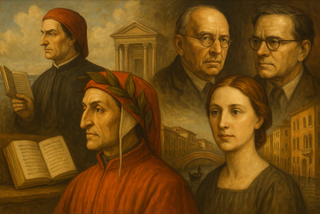
In the heart of Florence once stood “the temple where the baptistery is now located.”[1] Positioned as a Florentine centerpiece, the temple served as a sacred relic to Mars, son of the king of the gods in Roman mythology, Jupiter.[2] Mars, the god of war, was the lover
Evidence-Based Practice (EBP) is founded on a simple yet demanding premise: decisions should be grounded in the best available research evidence, informed by professional expertise, and shaped by contextual factors such as organisational priorities or patient values. In healthcare and other leadership contexts, this balance is not achieved by chance
To live the life of the mind is to navigate the deep currents of thought and the restless tides of the world with the scholar’s precision and the poet’s eye. Here, the arc of a life bends toward the True, the Good, and the Beautiful, and the work

The keynote address for incoming doctoral students at Freed-Hardeman University, titled On Being Scholarly, was delivered by Dr. Shawn D. Mathis, PhD, on May 13, 2018, in Henderson, TN. You are a scholar; these are your fellows. Individually, you are scholars. A scholar is one given to serious academic inquiry.
Reflective Commentary (2025) The following essay was written in 2014 for one of my earliest doctoral courses at Faulkner University. Dr. Robert Woods led the course titled “Introduction to Human Letters." An Evaluative Inquiry into the Life of the Modern Liberal Individual Leisure and festivity together form the foundation
Churches of Christ have long been known for their commitment to Scripture. That commitment has shaped preaching, worship, and the shared life of congregations for generations. It reflects a deeply held conviction: that the church is not guided by human preference or tradition alone, but by the word of God.
by Shawn D. Mathis, PhD, MSc (Oxon), MA
In the previous articles, we have considered how Scripture is engaged within two overlapping contexts in Churches of Christ, and how those who teach and lead often move between them in the ordinary work of ministry. These patterns are not abstract. They shape how decisions are made, how authority is
by Shawn D. Mathis, PhD, MSc (Oxon), MA
In the previous article, we considered how Churches of Christ have come to engage Scripture within two overlapping contexts—one primarily academic, the other primarily congregational. That distinction helps clarify how the same commitment to Scripture can be expressed through different patterns of study and application within the life of
by Shawn D. Mathis, PhD, MSc (Oxon), MA
Churches of Christ have long understood themselves to be a people shaped by Scripture. From their beginnings in the American Restoration Movement, they have sought not merely to honor the Bible, but to take it seriously as the governing authority for faith and practice. That commitment has produced a deep
by Shawn D. Mathis, PhD, MSc (Oxon), MA
This was presented at LeadersConnect at Faulkner University in Montgomery, Alabama, on June 18, 2024, by Shawn D. Mathis, PhD. Introduction The responsibility of elders in the Church of Christ is traditionally framed in terms of local oversight: shepherding the congregation, guarding doctrine, and ensuring the spiritual well-being of the
by Shawn D. Mathis, PhD, MSc (Oxon), MA
At a lecture in 2018 at Faulkner University, I said something that has stirred no small amount of controversy: many churches are not declining because the gospel is weak—they are declining because leadership is. I stand by that. For too long, we have comforted ourselves with a narrative that
by Shawn D. Mathis, PhD, MSc (Oxon), MA
Alexander Campbell is often remembered as a religious reformer, a restorer of primitive Christianity, or a controversial frontier voice in the American religious experiment. Yet to leave him there is to miss something essential. Campbell was, at his core, an intellectual of unusual discipline and reach—a man whose theological
by Shawn D. Mathis, PhD, MSc (Oxon), MA
There is a quiet but decisive error that has come to shape much of modern engagement with the Bible. It is rarely stated outright, yet it governs the way Scripture is approached, interpreted, and applied. The Bible is often treated as a repository of religious ideas, a collection of moral
by Shawn D. Mathis, PhD, MSc (Oxon), MA