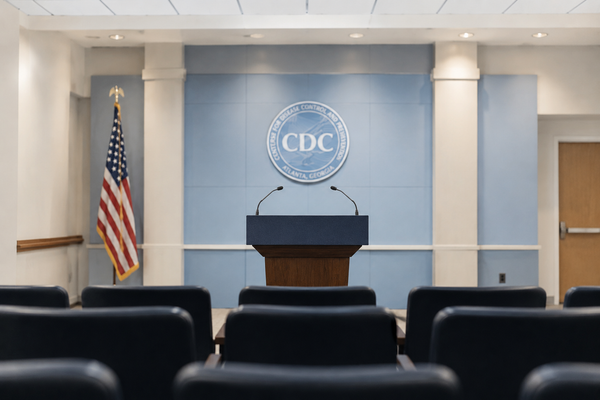
The world’s growing instability in health financing is sometimes described as a budget problem. In reality, it is a far more complex issue: a governance crisis within the institutions responsible for global public health. While the consequences are increasingly visible in primary healthcare systems around the world, the underlying
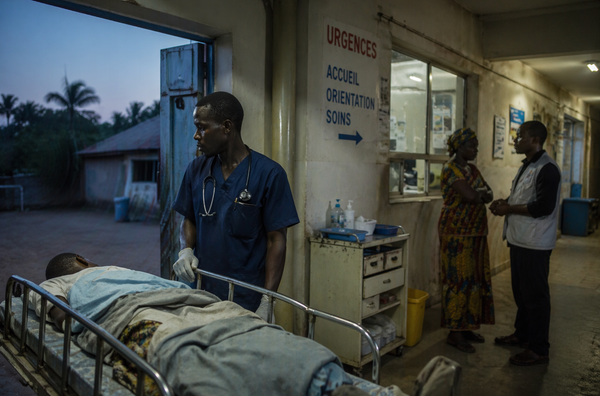
Author's Note: While researching these outbreaks, I found myself returning to a distinction that seemed increasingly important. Congo continues to manage epidemic disease as part of lived experience. In the United States, measles survives largely as historical memory. The epidemiological differences are obvious. Less obvious is the question
Author's Note: My interest in the legitimacy of international institutions emerged through graduate work in global healthcare leadership at the University of Oxford, participation in a board director program led by Professor Andrew Kakabadse at Henley Business School, and subsequent research into governance, development, and institutional authority. While
Author's Note: My interest in the legitimacy of international institutions emerged through graduate work in global healthcare leadership at the University of Oxford, participation in a board director program led by Professor Andrew Kakabadse at Henley Business School, and subsequent research into governance, development, and institutional authority. While
The world’s growing instability in health financing is sometimes described as a budget problem. In reality, it is a far more complex issue: a governance crisis within the institutions responsible for global public health. While the consequences are increasingly visible in primary healthcare systems around the world, the underlying
Author's Note: While researching these outbreaks, I found myself returning to a distinction that seemed increasingly important. Congo continues to manage epidemic disease as part of lived experience. In the United States, measles survives largely as historical memory. The epidemiological differences are obvious. Less obvious is the question
When Mehmet Oz remarked that America was becoming “underbabied,” the reaction was immediate. Many people mocked the phrase. Others heard it as political pressure, demographic panic, or another attempt to turn family life into an ideological argument. Yet the strong reaction revealed something deeper than the awkwardness of the phrase
The resignation of Food and Drug Administration (FDA) Commissioner Martin Makary would ordinarily constitute little more than another episode in Washington’s familiar cycle of bureaucratic turnover. Senior officials depart. Interim appointees rotate through agencies. Administrations recalibrate priorities. Yet the significance of the present moment lies not in the resignation
Author's Note: During my own work in healthcare leadership and health systems, I have repeatedly encountered physicians who describe the same frustration: the growing inability to practice continuity-based care within systems increasingly organized around transactions, documentation requirements, and productivity metrics. While the particulars vary, the underlying concern
In April 2026, I led a three-part seminar series titled “Leading Change in Complex, Resource-Constrained Health Systems: The Reality of the DRC.” Hosted by the Higher Institute of Nursing Sciences (ISSI), the series brought together healthcare professionals working in conditions that resist easy description, and perhaps easy resolution.
Intervention Strategies in Davidson County
Costs, Benefits, and Sectoral Influences
Obesogenic Food Environments
Regulatory changes and investments to improve access to nutritious foods carry initial costs. Long-term benefits include reduced healthcare spending and growth in health-conscious industries. These changes can foster innovation and stakeholder alignment.
Economic Planning &