
The Hebrew Scriptures as Divine Speech: A Study of Authority, Inspiration, and Canon

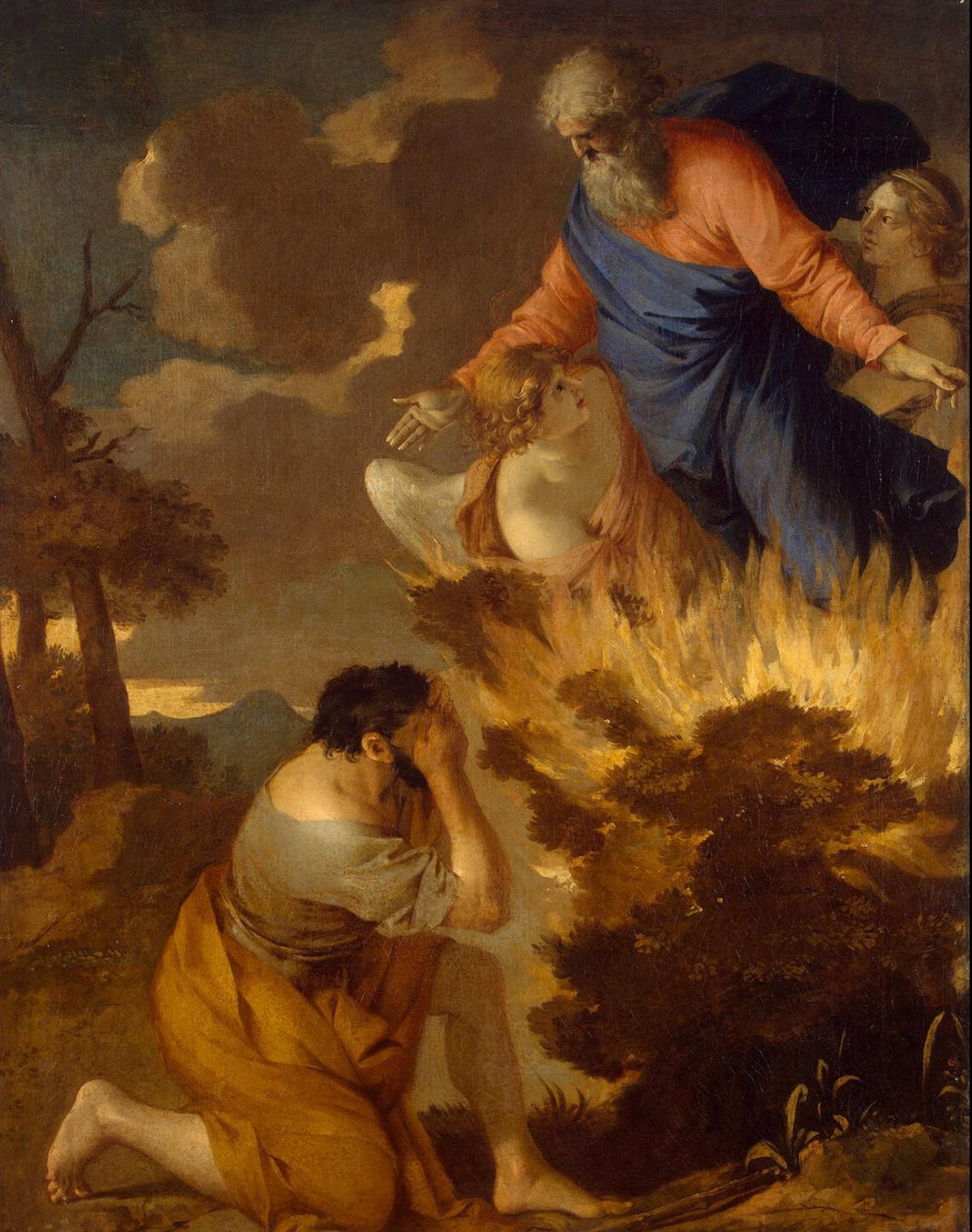
Author’s Note: The following essay is drawn from a forthcoming book manuscript currently in development. It is an excerpt from a larger chapter and is presented here in a provisional, condensed form. The work reflects more than thirty years of study of the Hebrew Scriptures as translated into the Greek Septuagint and the Christian Scriptures in Koine Greek. This particular piece required over a year of sustained research and writing and will continue to be refined as the broader book project develops.
The claim that Scripture is ‘the word of God’ is foundational to Christianity, yet widely contested. Within conservative Christian theology, it functions as the central affirmation about the nature, authority, and reliability of the biblical text. Yet the meaning of this conservative claim is often assumed rather than examined, or else redefined in ways that separate divine authority from the actual words of Scripture. In many modern accounts, Scripture is described as a witness to divine revelation, a record of religious experience, or a vehicle through which God may speak, rather than as divine speech in a direct and determinative sense. These modern approaches are often shaped by relativism, the belief that knowledge and truth exist in relation to culture, society, or historical context, rather than as absolute realities. Relativism raises such questions as: in what way, and at what level, can Scripture alone be called ‘THE’ Word of God?
The difficulty is not merely terminological but theological. If Scripture is divine in origin, how is that divine authorship related to the human agents who speak and write it? Does inspiration pertain primarily to ideas, experiences, or events, or does it extend to the words themselves? And if Scripture functions as an authoritative norm within the life of the church, what grounds that authority—historical reception, theological usefulness, or divine speech? These questions converge on a deeper issue: whether revelation is best understood as something behind the text, to which Scripture points, or as something that occurs in and through the text itself.
This study addresses these questions by attending closely to Scripture’s own presentation of its origin and authority. Rather than beginning with later doctrinal formulations or abstract theories of inspiration, it proceeds inductively by examining how biblical texts describe the relationship among divine speech, human mediation, and written form. My working hypothesis is that Scripture consistently portrays itself not merely as a witness to revelation but as the product and vehicle of divine speech—words spoken by God, entrusted to human agents, and preserved in written form without relinquishing their divine origin.
The methodology adapted for this paper required careful attention to both the linguistic and canonical dimensions of the text. Linguistically, it involves examining how Scripture describes the giving, speaking, and writing of divine words. Canonically, it requires situating these claims within the forms of Scripture that functioned authoritatively in the early Christian communities. The aim is not to impose a theory of inspiration onto the text but to trace the contours of Scripture’s own self-witness: how it presents its words, how it grounds their authority, and how it understands their role within the life of the people of God. See Figure 1. This approach also clarifies the theological stakes of the inquiry.
As Oliver O’Donovan argues in Resurrection and Moral Order, the authority of Scripture is intelligible only within the broader framework of God’s self-disclosure in history, climactically vindicated in the resurrection of Jesus Christ. The resurrection, in O’Donovan’s account (11–28), constitutes God’s public vindication of his acts in history and provides the ontological ground for authoritative moral reasoning, including the church’s faithful reception of Scripture. It establishes the conditions under which God’s acts may be faithfully remembered, interpreted, and obeyed. In this sense, Scripture is best understood as both fully divine and fully textual—that is, wholly originating in God while being entirely mediated through human language, literary forms, and historical contexts, and therefore requiring disciplined and reverent interpretation
This understanding stands in continuity with the wider Christian tradition. John Calvin, for example, insists in Institutes of the Christian Religion (1.7–1.9), especially 1.7.4, that Scripture derives its authority “from the mouth of God himself” (a Dei ipsius ore), and in 1.9.1 he warns that true understanding arises only when interpreters submit themselves to the Spirit speaking in the text rather than “bring forward their own rash opinions” (temere effutiant). Gregory of Nyssa, in Life of Moses (II.1–2), presents Scripture as a “rule of virtue” that leads the reader toward participation in the true life, as preserved in the edition and translation of Jean Daniélou (Sources Chrétiennes 1; Paris: Cerf, 1941). Stanley Hauerwas likewise argues in A Community of Character (Notre Dame, IN: University of Notre Dame Press, 1981), especially in the introduction, that Scripture forms a truthful and accountable people whose identity is shaped not merely by rules but by participation in God’s ongoing narrative. These perspectives reinforce the claim that Scripture’s authority is not abstract or procedural but communicative and formative.
The following sections will argue that the Old Testament presents a coherent and sustained theology of divine speech in which God speaks in determinate words, mediates those words through chosen agents, and preserves them in written form as an enduring and authoritative revelation. This pattern, already evident in the foundational texts of Israel’s formation, provides the conceptual framework for later developments in both Second Temple Judaism and the New Testament, where Scripture is received, cited, and interpreted as the continuing voice of God.
In this study, I use standard scholarly editions of the biblical texts: the Greek Old Testament (Septuagint) follows the Rahlfs–Hanhart edition (2006), the New Testament follows the Nestle–Aland 28th edition (2012), and the Jewish Scriptures are read in the Hebrew Masoretic Text; unless otherwise noted, English translations of the Septuagint are taken from the New English Translation of the Septuagint (2007), and references to the Hebrew Bible follow the Biblia Hebraica Stuttgartensia.
This methodological choice does not reflect a lesser regard for the Hebrew Bible but a deliberate focus on the forms of Scripture as they were received, cited, and interpreted in the New Testament and early Christian communities, where the Greek Scriptures (Septuagint) often functioned as the primary scriptural medium (see, e.g., Martin Hengel, The Septuagint as Christian Scripture [Edinburgh: T&T Clark, 2002], 1–32; Karen H. Jobes and Moisés Silva, Invitation to the Septuagint, 2nd ed. [Grand Rapids: Baker Academic, 2015], 17–41). Because this study examines how Scripture presents its own authority within the Christian canon, it prioritizes the textual forms that shaped apostolic proclamation and early Christian theology. Where features of the Hebrew text are directly relevant, they are addressed explicitly; however, the primary exegetical framework remains the Greek texts through which scriptural authority was most commonly expressed and understood in early Christian interpretation. This focus is therefore not only historical but also theological, insofar as it reflects how Scripture functioned authoritatively within the life of the early church.
This approach presents Scripture as a unified reality in which divine speech originates in God, is mediated through prophets, takes written form, is bounded by canonical authority, and is received as authoritative within the covenant community. The discussion that follows unfolds each of these dimensions in turn, beginning with the nature of divine speech and its prophetic mediation.
The Old Testament consistently presents divine revelation as spoken by God and delivered through human agents, with particular emphasis on the words themselves as the locus of authority. From the earliest accounts of Israel’s formation, God is portrayed not merely as inspiring insight but as actively governing the speech through which his message is conveyed.
In Exodus 4:10–12, Moses’s concern about his inability to speak is answered by God’s promise to be present with his speech and to direct its expression. The Septuagint renders Moses’s complaint as ἰσχνόφωνος καὶ βραδύγλωσσος ἐγώ εἰμι (“I am weak-voiced and slow-tongued”), presenting his concern as one of weakness and slowness in speech itself. The underlying Hebrew expression, “slow of speech and of slow tongue” (כְּבַד־פֶּה וּכְבַד לָשׁוֹן), similarly conveys a perceived lack of fluency or rhetorical readiness. Given his upbringing in Pharaoh’s court (cf. Acts 7:22) and his roughly forty years away from Egypt, Moses may plausibly have feared that he had become linguistically rusty and rhetorically ineffective within the formal setting of the Egyptian court. However, both traditions frame the issue broadly as a deficiency in speech rather than a specific language problem. God’s response, therefore, addresses not merely the use of language but the source and exercise of speech itself.
The Hebrew Masoretic Text states: וְאָנֹכִי אֶהְיֶה עִם־פִּיךָ וְהוֹרֵיתִיךָ אֲשֶׁר תְּדַבֵּר (“And I will be with your mouth, and I will teach you what you shall speak”). The verb וְהוֹרֵיתִיךָ (wehôrētîkā, “I will teach you”) conveys direct instruction, indicating that the content of Moses’s speech is not self-generated but given under divine direction. This understanding is preserved across major English translations based on the Hebrew: the King James Version reads, “I will be with thy mouth, and teach thee what thou shalt say,” the English Standard Version similarly, “I will be with your mouth and teach you what you shall speak,” and the New International Version, “I will help you speak and will teach you what to say.” While differing slightly in style, each reflects the same translational judgment that God’s role includes instruction in the content of Moses’s speech.
From a philological perspective, the Masoretic Text must be regarded as the primary and more precise witness to the wording of Exodus 4:12, since it preserves the Hebrew source text and its explicit verb “teach,” whereas the Septuagint (Rahlfs–Hanhart) represents an early translation that re-expresses this idea with a broader verb (“guide/direct”), reflecting interpretive nuance rather than an independent or more original textual reading. This nuance is not reflected in major English translations of the Old Testament translated from the Hebrew text. It appears instead only in English translations of the Septuagint itself, such as NETS, Brenton’s Septuagint, and the Lexham English Septuagint, which variously render the Greek in ways that reflect “instruct,” “guide,” or “direct.” The resulting difference, therefore, does not arise within the mainstream English translation tradition as such, but between the underlying Hebrew and Greek textual traditions.
The Septuagint, however, renders the promise with a distinct nuance: καὶ ἐγὼ ἀνοίξω τὸ στόμα σου καὶ συμβιβάσω σε ὃ μέλλεις λαλῆσαι (“And I will open your mouth, and I will guide you in what you are about to speak”). Here, ἀνοίξω (“I will open”) emphasizes divine enablement, while συμβιβάσω (“I will guide/direct”) highlights God’s active role in directing Moses’s speech rather than explicitly “teaching” its content. This difference reflects the character of the Septuagint as an early translation that expresses the underlying claim through a slightly different conceptual lens. Yet the divergence is one of emphasis rather than substance: both the Hebrew tradition and its major English translations on the one hand, and the Greek rendering on the other, converge in portraying Moses’s speech as arising under God’s prior initiative and control.
The subsequent provision of Aaron, who “can speak well” (Exod. 4:14), further highlights the distinction between natural rhetorical ability and divinely enabled speech, reinforcing that Moses’s authority does not rest on personal eloquence but on speech governed by God. As Brevard S. Childs observes (The Book of Exodus: A Critical, Theological Commentary [Philadelphia: Westminster Press, 1974], 86–89), Moses’s authority is grounded not in personal ability or rhetorical skill but in divinely authorized speech. This establishes a broader pattern in which prophetic authority rests on speech that is not self-generated but is taught, directed, and brought forth by God, grounding its authority in the divine source from which it proceeds.
This emphasis extends to the written form of revelation. In Exodus 24:4, “Moses wrote all the words of the Lord” (καὶ ἔγραψεν Μωυσῆς πάντα τὰ ῥήματα τοῦ κυρίου), where the aorist verb ἔγραψεν presents the writing as a completed and definite historical act. In context, this indicates that writing is not merely a secondary record but a divinely authorized means of preserving God’s words, expressed in language that anticipates later prophetic and New Testament formulations.
The material dimension of divine authorship is further emphasized in Exodus 31:18 and 32:16, where the covenant tablets are described as written “by the finger of God” (πλάκας λιθίνας γεγραμμένας τῷ δακτύλῳ τοῦ θεοῦ, “stone tablets written by the finger of God,” Exod. 31:18; Hebrew: כְּתֻבִים בְּאֶצְבַּע אֱלֹהִים, “written by the finger of God”). Here, the perfect participle γεγραμμένας (“having been written”), agreeing with the accusative plural πλάκας λιθίνας (“stone tablets”), underscores the inscription as a completed divine act, highlighting its enduring and authoritative character, while the Hebrew formulation reinforces the concreteness of divine agency in the writing.
The tablets are further identified as the very “work of God,” and the inscription itself as “the writing of God”: καὶ αἱ πλάκες ἔργον θεοῦ ἦσαν, καὶ ἡ γραφὴ γραφὴ θεοῦ ἐστιν κεκολαμμένη ἐν ταῖς πλαξίν (“the tablets were the work of God, and the writing was God’s writing, engraved upon the tablets,” Exod. 32:16). The Hebrew Masoretic Text reads: וְהַלֻּחֹת מַעֲשֵׂה אֱלֹהִים הֵמָּה וְהַמִּכְתָּב מִכְתַּב אֱלֹהִים הוּא חָרוּת עַל־הַלֻּחֹת (“the tablets were the work of God, and the writing was the writing of God, engraved upon the tablets”). The Hebrew formulation intensifies the claim through its parallel structure, attributing both the tablets themselves and their inscribed content directly to God, while the participle חָרוּת (“engraved”) emphasizes the permanence and fixity of the inscription. The Septuagint similarly reinforces this point through the perfect participle κεκολαμμένη (“having been engraved”), which, like γεγραμμένας in the preceding passage, presents the inscription as complete and enduring.
As Moshe Weinfeld argues in Deuteronomy and the Deuteronomic School (Oxford: Clarendon Press, 1972), 193–95, the “finger of God” motif attributes ultimate authority to God even where human mediation is present, grounding both the origin and authority of the written law in divine agency rather than human initiative. This emphasis is not merely metaphorical but expresses a theological claim: both the content of the law and its material inscription are presented as deriving from God himself, so that the written form of the law shares in the authority of its divine source and resists any sharp separation between revelation and inscription.
A similar emphasis appears in the Balaam narratives (Num. 22:38; 23:5, 12, 16, 26), where even a reluctant prophet is constrained to speak only what God places in his mouth: “whatever word God puts into my mouth, that I will speak” (τὸ ῥῆμα, ὃ ἐὰν βάλῃ ὁ θεὸς εἰς τὸ στόμα μου, τοῦτο λαλήσω, Num. 22:38). The structure of the Greek sentence reinforces this restriction. The relative clause ὃ ἐὰν βάλῃ (“whatever he places”) is taken up again by the demonstrative τοῦτο (“this”), establishing a direct correspondence between what God gives and what the prophet speaks. In this way, the form of the expression itself underscores that the prophetic word is not self-generated but received, leaving no room for expansion or modification of the given message.
In the Balaam cycle, this dynamic is especially pronounced: the prophet’s inability to alter or supplement the message underscores the extent to which his speech is governed by what he has received (see Baruch A. Levine, Numbers 21–36, 166–72). As Moshe Weinfeld and Christopher R. Seitz observe, such scenes consistently locate prophetic authority in words given by God rather than in the prophet’s own initiative.
These texts establish a consistent pattern: the word of God precedes and governs its human expression. Prophetic speech is defined by conformity to what is given, and, as the preceding passages have shown, this same authority extends into its written preservation. The result is a unified picture in which both spoken and written revelation derive their authority from the divine source that gives them, resisting any sharp division between revelation and its inscription.
1.4 Scripture as Norm: Authority, Boundary, and Obedience
Deuteronomy gathers these themes into a sustained theological reflection on revelation, authority, and obedience. Deuteronomy 4:2 explicitly prohibits adding to or subtracting from the commanded word—“you shall not add to the word … nor take away from it” (οὐ προσθήσετε πρὸς τὸν λόγον … οὐδὲ ἀφελεῖτε ἀπ’ αὐτοῦ; Hebrew: לֹא תֹסִפוּ עַל־הַדָּבָר … וְלֹא תִגְרְעוּ מִמֶּנּוּ [“you shall not add to the word … nor take away from it”]). Deut. 4:2 LXX; Hebrew: לֹא תֹסִפוּ עַל־הַדָּבָר … וְלֹא תִגְרְעוּ מִמֶּנּוּ). This prohibition establishes the text itself as a bounded and sufficient form of divine disclosure whose authority is compromised by alteration. The Hebrew formulation sharpens the force of the command through its concrete verbs—תֹסִפוּ (“you shall add”) and תִגְרְעוּ (“you shall take away”)—which construe the commanded word as a delimited entity not subject to expansion or reduction. The paired future prohibitions in Greek, with opposing prepositions (πρός / ἀπό), likewise present the revealed word as a bounded and determinate whole whose integrity is violated equally by addition or subtraction. Moses’ mediating role is therefore carefully delimited: he stands between God and the people to declare “the word of the LORD” (τὸν λόγον κυρίου, Deut. 5:5 LXX), yet the words themselves remain God’s possession rather than Moses’ interpretive extension. This logic reaches a climactic formulation in Deuteronomy 18:18–19, where God promises to raise up a prophet like Moses and to place His own words directly in that prophet’s mouth (δώσω τὰ ῥήματά μου ἐν τῷ στόματι αὐτοῦ, “I will put my words in his mouth,” Deut. 18:18 LXX; cf. v. 19), thereby grounding prophetic authority not in personal insight but in divinely given speech and holding the people morally accountable for their response to those words. As Patrick D. Miller observes in Deuteronomy (64–69), and as J. G. McConville similarly argues in Deuteronomy (321–26), this framework reflects a coherent theology of revelation and prophetic succession in which divine speech is transmitted through authorized human agents without being surrendered to human control or modification. Revelation is thus construed as divine speech entrusted to human agents while remaining wholly governed by its divine origin, so that its authority resides not in interpretive expansion but in faithful reception, transmission, and obedience.
Moses’ mediating role is correspondingly limited. He stands between God and the people to declare “the word of the LORD” (τὸν λόγον κυρίου, Deut. 5:5), and the singular formulation is significant: Moses does not generate or develop the message but delivers a word that already belongs to God. His role is therefore declarative rather than creative, transmitting rather than extending the content of revelation.
This logic reaches a climactic formulation in Deuteronomy 18:18–19, where God promises to raise up a prophet like Moses and declares, “I will put my words in his mouth” (δώσω τὰ ῥήματά μου ἐν τῷ στόματι αὐτοῦ; Hebrew: וְנָתַתִּי דְבָרַי בְּפִיו). In the Hebrew text, the phrase דְבָרַי (“my words”) makes explicit that what is given is not a general message but specific verbal content entrusted to the prophet. The first-person divine subject and possessive pronoun (ῥήματά μου) likewise make clear that prophetic speech originates in God’s own initiative and authority rather than in the prophet’s interpretive discretion. The prophet speaks words that remain God’s possession, and the people are held accountable for their response to those words.
Revelation is thus consistently construed as divine speech entrusted to human agents without being surrendered to human control or modification—a pattern that, as commentators such as Patrick D. Miller (Deuteronomy, Interpretation; Louisville: Westminster John Knox, 1990, 64–69) and J. G. McConville (Deuteronomy, Apollos Old Testament Commentary; Downers Grove, IL: IVP Academic, 2002, 321–26) observe, underlies Deuteronomy’s broader theology of revelation and prophetic succession.
Deuteronomy 29:29 articulates the epistemic and covenantal boundary of revelation: “the secret things belong to the LORD our God, but the things revealed belong to us and to our children forever” (τὰ κρυπτὰ κυρίῳ τῷ θεῷ ἡμῶν, τὰ δὲ φανερὰ ἡμῖν καὶ τοῖς τέκνοις ἡμῶν εἰς τὸν αἰῶνα, “the secret things belong to the Lord our God, but the things revealed belong to us and to our children forever,” Deut. 29:29 LXX; Hebrew: הַנִּסְתָּרֹת לַיהוָה אֱלֹהֵינוּ … וְהַנִּגְלֹת לָנוּ וּלְבָנֵינוּ). By “boundary,” this text marks a divinely instituted distinction between what God has chosen to disclose and what God has reserved to himself—a distinction that regulates not the scope of obedience but the locus of human responsibility and authority, identifying as binding for the covenant community precisely that which has been revealed. The contrast between τὰ κρυπτὰ and τὰ φανερὰ—and correspondingly between הַנִּסְתָּרֹת (“the hidden things”) and הַנִּגְלֹת (“the revealed things”)—thus distinguishes between undisclosed divine knowledge and covenantally binding revelation. What is revealed is given “to us and to our children forever,” and therefore constitutes a permanent and covenantally authoritative disclosure, not for speculation but for obedience. This principle is materially instantiated in Deuteronomy 31:24–26, where the written form of revelation is explicitly bounded and preserved: “when Moses finished writing all the words of this law in a book” (ἐν τῷ τελέσαι Μωυσῆς γράφων πάντας τοὺς λόγους τοῦ νόμου τούτου εἰς βιβλίον, v. 24), the book is placed beside the ark with the command, “you shall take this book of the law … and it shall be there as a witness” (λήμψεσθε τὸ βιβλίον τοῦ νόμου τούτου … καὶ ἔσται ἐκεῖ εἰς μαρτύριον, vv. 25–26). As Jeffrey H. Tigay observes in Deuteronomy (JPS Torah Commentary, 274–77), this placement signifies the enduring covenantal function of the written law as a stable witness and authoritative norm, defining both the limits of revelation and the ongoing accountability of the covenant community. Revelation is thus not only spoken but inscribed, preserved, and publicly accessible, ensuring that its authority endures across generations through its fixed textual form.
This concern for the bounded preservation of divine speech is enacted concretely in Deuteronomy 31:24–26. When Moses “finished writing all the words of this law in a book” (ἐν τῷ τελέσαι Μωυσῆς γράφων πάντας τοὺς λόγους τοῦ νόμου τούτου εἰς βιβλίον [“when Moses finished writing all the words of this law in a book”; Hebrew: כָּל־דִּבְרֵי הַתּוֹרָה הַזֹּאת [“all the words of this law”], v. 24), the book is placed beside the ark of the covenant with the command, “you shall take this book of the law … and it shall be there as a witness” (λάβετε τὸ βιβλίον τοῦ νόμου τούτου … καὶ ἔσται ἐκεῖ εἰς μαρτύριον [“take this book of the law … and it shall be there as a witness”], vv. 25–26). The Hebrew expression כָּל־דִּבְרֵי (“all the words”) underscores the comprehensiveness of what is written, presenting the law as a complete and bounded corpus rather than a developing or expandable tradition. The phrase functions not merely as a summary descriptor but as a delimiting expression, marking the written law as a fixed totality whose authority lies in its given form. The placement of the written law beside the ark formalizes its role as an enduring covenantal witness rather than a merely archival record, establishing it as a permanent, external standard that judges leaders and people alike. As Jeffrey H. Tigay observes (Deuteronomy, JPS Torah Commentary; Philadelphia: Jewish Publication Society, 1996), especially in his discussion of Deuteronomy 29:29 and 31:24–26, these texts present the written Torah as a stable and authoritative norm, defining both the limits of revelation and the ongoing accountability of the covenant community. This understanding of the written word as a bounded and authoritative norm provides the framework for the prophetic tradition’s explicit claims to divine speech.
Alongside explicit claims about divine inscription and textual preservation, the Old Testament repeatedly presents prophetic speech as the direct medium of God’s self-disclosure. This conviction is captured in the recurring prophetic formula “Thus says the LORD” (τάδε λέγει κύριος). The formula functions not merely as a rhetorical marker or introduction to exhortation but as an attribution of divine speech, identifying what follows as originating from God rather than from the prophet. Its repeated use establishes a conventional and recognized claim of divine authorship, not an inspired paraphrase or approximation.
In David’s final oracle, this claim is expressed with particular clarity: “The Spirit of the LORD spoke in me, and his word was upon my tongue” (πνεῦμα κυρίου ἐλάλησεν ἐν ἐμοί, καὶ ὁ λόγος αὐτοῦ ἐπὶ τῆς γλώσσης μου; Hebrew: רוּחַ יְהוָה דִּבֶּר־בִּי וּמִלָּתוֹ עַל־לְשׁוֹנִי [“the Spirit of the LORD spoke in me, and his word was upon my tongue”], 2 Sam. 23:2). On prophetic speech as Spirit-mediated divine utterance, see Walter Brueggemann and Patrick D. Miller, who emphasize that prophetic authority lies in divinely authorized speech rather than human initiative. The Hebrew expression וּמִלָּתוֹ (“and his word”) gives particularly concrete expression to the claim, locating the divine word directly upon the prophet’s tongue rather than in an internal or generalized inspiration. The grammar is decisive. The aorist verb ἐλάλησεν attributes the act of speaking directly to the Spirit, while the phrase ὁ λόγος αὐτοῦ identifies the articulated speech as God’s own possession. Divine agency is thus located at the level of spoken language itself rather than in an internal impulse or later reflection. Prophetic utterance is therefore presented not as inspired reflection but as divinely authored speech mediated through human articulation, resisting any separation between inspiration and linguistic form.
The truthfulness of prophetic speech is confirmed narratively in 1 Kings 17:24, where the widow of Zarephath recognizes Elijah as a “man of God” precisely because “the word of the LORD in your mouth is true” (λόγος κυρίου ἐν τῷ στόματί σου ἀληθής; Hebrew: דְּבַר־יְהוָה בְּפִיךָ אֱמֶת [“the word of the LORD in your mouth is truth”], 1 Kgs 17:24). The Hebrew noun אֱמֶת (“truth”) expresses the predicate in substantival form, reinforcing the location of truth in the divine word itself. The grammar is decisive. The predicate adjective ἀληθής (“true”) modifies λόγος rather than the prophet, locating truthfulness in the divine word itself rather than in the speaker’s character or sincerity. The formulation thus makes clear that truth is predicated not of the prophet but of the word of the LORD, which remains God’s possession (λόγος κυρίου) even as it is spoken through human mediation (ἐν τῷ στόματί σου). Prophetic legitimacy is therefore measured by correspondence to divinely given speech rather than by moral earnestness, personal sincerity, or charismatic effect. As scholars such as Walter Brueggemann (The Prophetic Imagination, 2nd ed.; Minneapolis: Fortress Press, 2001, 40–43) and Patrick D. Miller (“The Divine Council and the Prophetic Call,” Vetus Testamentum 18 [1968]: 100–107) observe, prophetic speech is best understood not as inspired reflection but as divinely mediated utterance.
The authority of prophetic and written revelation converges explicitly in the account of Josiah’s reforms (2 Kings 22:8–13), understood within the broader literary unit of 2 Kings 22–23, whose theological claims are expressed through narrative depiction rather than abstract or propositional assertion. In this narrative, the rediscovered “book of the law” (βιβλίον τοῦ νόμου, “the book of the law,” 2 Kgs 22:8 LXX) confronts both king and people alike with divine judgment. The text treats the written Torah not as a historical artifact but as a presently authoritative word whose neglect incurs covenantal consequence. When the book is found, it is read aloud before the king and recognized as bearing the binding “words of the LORD” (οἱ λόγοι κυρίου, “the words of the Lord,” 2 Kgs 22:11, 13 LXX), thereby identifying the written text itself as the vehicle of divine speech. The Josiah narrative thus presents written Scripture as a living covenant document whose authority addresses the present community and summons immediate obedience.
A similar pattern appears in Nehemiah 8:8, where the Septuagint emphasizes both proclamation and interpretation. This same pattern reappears in the postexilic period, when Ezra reads aloud from the book of the law before the gathered assembly and the Levites give the sense so that the people may understand (Neh. 8:1–8). Written Scripture here functions as public divine address, requiring both proclamation and interpretation. Ezra reads “from the book of the law of God” (ἐκ τοῦ βιβλίου τοῦ νόμου τοῦ θεοῦ), marking the written text itself as the source of the address and identifying it as a fixed and divinely owned authority rather than a flexible tradition.
The Septuagint text makes this sequence explicit: καὶ ἀνέγνωσαν ἐν τῷ βιβλίῳ τοῦ νόμου τοῦ θεοῦ σαφῶς, καὶ ἐνετίθεσαν σύνεσιν, καὶ ἐνόησαν ἐν τῇ ἀναγνώσει (“and they read from the book of the law of God clearly, and they gave understanding, and they understood the reading,” Neh. 8:8 LXX). The sequence of verbs—ἀνέγνωσαν (“they read”), ἐνετίθεσαν σύνεσιν (“they gave understanding”), and ἐνόησαν (“they understood”)—marks a deliberate progression from authoritative reading to interpretive mediation to communal reception, indicating that understanding is not independent of the text but arises through its faithful exposition. The Levites also “explained the reading” (διεσάφουν τὴν ἀνάγνωσιν), reinforcing that interpretation serves to clarify what is written rather than to supplement it.
Nehemiah 8:8 thus provides a baseline account of interpretation as subordinate mediation: the law is read, understanding is imparted (ἐνετίθεσαν σύνεσιν), and the people understand the reading (ἐνόησαν ἐν τῇ ἀναγνώσει). The object of understanding is explicitly the text as read, so interpretation functions to secure comprehension rather than to generate supplementary content. Distinguishing this exegetical baseline is crucial, since later Second Temple interpretive practices often retain this pedagogical aim—especially in contexts of translation and public exposition—while also developing more traditioned forms of application in which the text’s authority is extended into new situations through established interpretive norms. Nehemiah 8 thus presents interpretation as service to a prior, determinate word, enabling obedience without relocating authority from the written law to its interpreters.
This division of labor reflects the linguistic realities of the postexilic community. Ezra reads the Torah in Hebrew, the sacred language of the text, while the Levites explain it to an audience whose everyday speech was increasingly Aramaic, ensuring comprehension (σύνεσιν) without displacing the authority of the written word itself (cf. Neh. 8:8; see also H. G. M. Williamson, Ezra, Nehemiah, WBC 16 [Waco, TX: Word Books, 1985]). Interpretation thus serves obedience, not innovation.
Significantly, the book of the law had been effectively absent from Israel’s public life for the duration of the Babylonian exile—approximately seventy years (cf. Jer. 25:11–12; 29:10)—yet its authority is not diminished by this period of silence. When the text is recovered and read, it confronts the community as already authoritative, demonstrating that the word of God retains its binding force even when unheard, unread, and unperformed. Scripture’s authority, therefore, does not depend on continuous proclamation or institutional enforcement but inheres in the divinely given text itself, awaiting rediscovery and faithful reception.
This same pattern reappears in the postexilic period, when Ezra reads aloud from the book of the law before the gathered assembly and the Levites give the sense so that the people may understand (Neh. 8:1–8). Written Scripture here functions as public divine address, requiring both proclamation and interpretation. The Septuagint makes this dynamic explicit: Ezra reads from “the book of the law of God” (ἐκ τοῦ βιβλίου τοῦ νόμου τοῦ θεοῦ) “clearly” (σαφῶς), while the Levites “give understanding” (καὶ ἐνετίθεσαν σύνεσιν) and “explain [by translating] the [Hebrew] reading” (διεσάφουν τὴν ἀνάγνωσιν) so that the people might understand (Neh. 8:8). The scene thus presents the written Torah as authoritative divine speech that requires proclamation, interpretive mediation, and a response grounded in understanding, thereby identifying the written text itself as the source of the address and as a fixed, divinely owned authority rather than a flexible or expandable tradition.
Nehemiah 8:8 further provides a baseline account of interpretation as subordinate mediation: the law is read, understanding is imparted, and the people understand the reading (καὶ ἐνετίθεσαν σύνεσιν … καὶ ἐνόησαν ἐν τῇ ἀναγνώσει, Neh. 8:8). The sequence is important. Understanding is given, and the people understand the reading itself, so the object of comprehension is explicitly the text as read rather than an additional layer of meaning. Interpretation, therefore, functions to secure comprehension, not to generate supplementary content.
This baseline is crucial for situating later developments. In the Second Temple period, interpretive and translational practices—such as those associated with synagogue reading and exposition—continue this didactic aim of clarifying the text, even as they also extend its application into new contexts through established interpretive norms. Nehemiah 8 thus presents interpretation as service to a prior, determinate word, enabling obedience without relocating authority from the written law to its interpreters.
This theological pattern is further made explicit in Nehemiah 9:30, which reflects on Israel’s history by affirming that God “bore witness against them by your Spirit through the hand of the prophets” (καὶ διεμαρτύρω αὐτοῖς ἐν πνεύματί σου ἐν χειρὶ τῶν προφητῶν, “and you bore witness against them by your Spirit through the hand of the prophets,” Neh. 9:30; trans. author). Here, prophetic speech is explicitly located within a pneumatological framework that unites divine agency, prophetic mediation, and historical accountability. Prophetic speech is thus neither spontaneous nor merely situational; it is the means by which God addresses his people across time, whether through living voices or through texts that preserve and extend that address.
In this way, the relationship between prophetic proclamation and written Torah is not competitive but convergent: both function as vehicles of the same divine speech, binding the community across generations. As observed in discussions of covenantal renewal traditions, the convergence of prophetic speech, written Torah, and communal accountability—seen, for example, in 2 Kings 22 and Nehemiah 9—demonstrates that Scripture operates as an enduring norm that confronts each generation with the claims of God (cf. Marvin A. Sweeney, King Josiah of Judah: The Lost Messiah of Israel [Oxford: Oxford University Press, 2001], 132–38; Joseph Blenkinsopp, Ezra–Nehemiah, OTL [Philadelphia: Westminster Press, 1988], 295–97).
This division of labor reflects the linguistic realities of the postexilic community. Ezra reads the Torah in Hebrew, the sacred language of the text, while the Levites explain it so that the people may understand (σύνεσιν), addressing an audience whose everyday speech was increasingly Aramaic, not Hebrew, a well-attested feature of the Persian period (cf. Neh. 8:8; see also H. G. M. Williamson, Ezra, Nehemiah, Word Biblical Commentary 16 [Waco, TX: Word Books, 1985]). In this setting, the public reading of the Torah is clearly distinguished from its explanation, ensuring comprehension without displacing the authority of the written word itself. Interpretation thus serves obedience, not innovation.
Significantly, the book of the law had been effectively absent from Israel’s public life during the Babylonian exile—conventionally dated to approximately seventy years (586–538 BCE), as reflected in texts such as Jeremiah 25:11–12 and 29:10—yet its authority is not diminished by this period of silence. When the text is recovered and read, it confronts the community as already authoritative, demonstrating that the word of God retains its binding force even when unheard, unread, and unperformed. Scripture’s authority, therefore, does not depend on continuous proclamation or institutional enforcement but inheres in the divinely given text itself, awaiting rediscovery and faithful reception.
The Psalms extend this theology of divine speech by reflecting devotionally and doxologically on the character of God’s word. Psalm 12:6 describes “the words of the LORD” as pure—“the words of the Lord are pure words” (τὰ λόγια κυρίου λόγια καθαρά, Ps 11:7)—likened to refined silver, while Psalm 18:30 declares the word of the LORD to be “refined” or “tested” (τὸ λόγιον κυρίου πεπυρωμένον, Ps 17:31), portraying it as flawless and trustworthy, a shield for those who take refuge in him. In both cases, divine speech is presented as intrinsically reliable, requiring no external validation and functioning as a secure basis for trust and obedience.
Psalm 19:7–11 intensifies this claim by identifying the law of the LORD as perfect, life-giving, and morally illuminating, uniting revelation with transformation: “the law of the Lord is blameless/perfect, restoring souls” (ὁ νόμος κυρίου ἄμωμος, ἐπιστρέφων ψυχάς, Ps 18:8), and “the commandment of the Lord is radiant, enlightening the eyes” (ἐντολὴ κυρίου τηλαυγής, φωτίζουσα ὀφθαλμούς, Ps 18:9). This pattern extends across the Psalter, which repeatedly affirms the enduring and illuminating character of divine speech: “Forever, O Lord, your word remains in heaven” (Ps 118:89), “Your word is a lamp to my feet” (v. 105), “The disclosure of your words gives light” (v. 130), and “The sum of your words is truth” (v. 160). Similar affirmations recur throughout the Psalter (e.g., Ps 33:4; 55:5), where God’s word is praised not only for its content but for its intrinsic reliability and efficacy. As studies of the Psalms’ theology of divine speech emphasize (e.g., James L. Mays, The Lord Reigns: A Theological Handbook to the Psalms [Louisville: Westminster John Knox, 1994], 113–19; John Goldingay, Psalms, Volume 1: Psalms 1–41 [Grand Rapids: Baker Academic, 2006], 194–98), these texts consistently present the word of God as trustworthy, effective, and normatively authoritative.
Nowhere is this vision more sustained than in Psalm 119, which treats the word of God—across multiple near-synonymous designations—as eternally established (“Forever, O Lord, your word remains in heaven,” εἰς τὸν αἰῶνα, κύριε, ὁ λόγος σου διαμένει ἐν τῷ οὐρανῷ, Ps 118:89), illuminating for the faithful (“Your word is a lamp to my feet,” λύχνος τοῖς ποσίν μου ὁ λόγος σου, v. 105), revelatory of understanding (“The disclosure of your words gives light,” ἡ δήλωσις τῶν λόγων σου φωτιεῖ, v. 130), and summarily characterized as truth (“The sum / beginning of your words is truth,” ἀρχὴ τῶν λόγων σου ἀλήθεια, v. 160). As J. A. Motyer argues in his treatment of Psalm 119 (“The Psalms and the Authority of Scripture,” in The Living and Active Word of God, ed. Samuel T. Logan Jr. [Phillipsburg, NJ: P&R, 1983], 97–112), the psalm offers a comprehensive theology of the divine word, while Adele Berlin (The Dynamics of Biblical Parallelism [Bloomington: Indiana University Press, 1985], 132–35) highlights its use of multiple lexical designations to articulate the fullness of divine revelation.
The psalm does not argue for inspiration abstractly; it presupposes it devotionally, portraying obedience to God’s word as participation in a stable moral order grounded in God’s own faithfulness. This theological vision coheres with broader Old Testament patterns in which prophetic speech, written Torah, and covenantal accountability converge—what Nehemiah later describes as God bearing witness “by your Spirit through the hand of the prophets” (καὶ διεμαρτύρω αὐτοῖς ἐν πνεύματί σου ἐν χειρὶ τῶν προφητῶν, Neh. 9:30)—a convergence also noted in studies of Josiah’s reform and postexilic renewal (e.g., Marvin A. Sweeney, King Josiah of Judah: The Lost Messiah of Israel [Oxford: Oxford University Press, 2001], 132–38; Joseph Blenkinsopp, Ezra–Nehemiah, OTL [Philadelphia: Westminster Press, 1988], 295–97).
Beyond recurring prophetic formulae, the Old Testament contains numerous passages in which prophets explicitly identify their speech as originating in God himself, thereby making direct claims about the divine source, authority, and durability of prophetic words. Isaiah’s ministry opens with a cosmic summons—“Hear, O heaven, and give ear, O earth, for the Lord has spoken” (ἄκουε, οὐρανέ, καὶ ἐνωτίζου, γῆ, ὅτι κύριος ἐλάλησεν, Isa. 1:2)—which frames the prophet’s message not as commentary on divine action but as the articulation of divine speech itself. The grammar is decisive: the aorist ἐλάλησεν attributes the act of speaking directly to the LORD, while the prophet functions solely as the medium through which that speech is publicly articulated. Isaiah’s words thus claim immediate divine authorship, not derivative reflection, grounding prophetic authority in God’s own act of speaking rather than in the prophet’s insight or rhetorical power.
Isaiah 8:20 further establishes “the law and the testimony” (εἰς τὸν νόμον καὶ εἰς τὸ μαρτύριον, Isa. 8:20) as the normative standard by which all claims are judged, locating authority not in the prophet’s person but in an external, determinate word that bears God’s own light. The formulation directs evaluation away from prophetic charisma toward this revealed word as the criterion of truth. This conviction is reinforced by Isaiah 40:8—“but the word of our God remains forever” (τὸ δὲ ῥῆμα τοῦ θεοῦ ἡμῶν μένει εἰς τὸν αἰῶνα)—which contrasts the transience of human speech with the permanence of divine speech, and by Isaiah 55:10–11, which presents the word as effective divine action: “so shall my word be… it shall not return empty” (οὕτως ἔσται τὸ ῥῆμά μου… οὐ μὴ ἐπιστρέψῃ κενόν, Isa. 55:11). Scripture thus depicts divine speech as norming, enduring, and effectual—an authoritative word whose validity does not depend on human endorsement but on God’s own act of speaking. Isaiah consistently presents the word of God as both the source of prophetic authority and the means by which God accomplishes his purposes. On Isaiah’s theology of divine speech and the efficacy of the word, see John N. Oswalt, The Book of Isaiah: Chapters 1–39, NICOT (Grand Rapids: Eerdmans, 1986), 92–96; and Brevard S. Childs, Isaiah, OTL (Louisville: Westminster John Knox, 2001), 296–301.
The Isaianic tradition also makes explicit claims about the mediation of divine words through the prophet. Isaiah 59:21 depicts God placing his words in the prophet’s mouth as an enduring covenantal act—“my words which I have put into your mouth” (τὰ ῥήματά μου ἃ ἔδωκα εἰς τὸ στόμα σου, Isa. 59:21). The grammar is decisive. The possessive τὰ ῥήματά μου assigns unambiguous ownership of the utterance to God himself, while the aorist ἔδωκα presents the placement of these words as a completed divine act, identifying God as the effective agent of prophetic speech rather than an ongoing human initiative. By specifying the locus of mediation as εἰς τὸ στόμα σου, the text situates inspiration at the level of articulated speech rather than internal impression or reflective insight.
Framed covenantally as an arrangement that endures “from now and forever,” the syntax presents prophetic speech as divinely authored, verbally mediated, and durably secured across generations. Taken together, these grammatical features show that divine ownership is retained (τὰ ῥήματά μου), the act of mediation is effected by God (ἔδωκα), and the locus of inspiration is articulated speech (εἰς τὸ στόμα σου), while the surrounding covenantal frame secures the permanence of this arrangement. Prophetic speech is thus presented as divinely authored, verbally mediated, and covenantally secured, grounding its authority in God’s own action rather than in the prophet’s insight, sincerity, or historical situation.
Jeremiah develops this theology of divine speech with particular intensity, repeatedly grounding prophetic authority in the mediation of God’s own words rather than in personal insight or rhetorical skill. In the prophet’s call narrative, God declares, “Behold, I have put my words into your mouth” (ἰδοὺ δέδωκα τοὺς λόγους μου εἰς τὸ στόμα σου; Hebrew: הִנֵּה נָתַתִּי דְבָרַי בְּפִיךָ [“behold, I have put my words in your mouth”], Jer. 1:9). The Hebrew expression דְבָרַי (“my words”) reinforces the concrete and verbal character of what is given, marking a direct continuity with the Deuteronomic promise of words placed in the prophet’s mouth. The grammar is decisive: the perfect verb δέδωκα presents the placement of the words as a completed divine act with continuing force, while the direct object τοὺς λόγους μου assigns unambiguous ownership of the speech to God himself, locating prophetic authority in divinely given words rather than in prophetic initiative. Prophetic vocation is thus constituted by verbal mediation—God’s words placed in the prophet’s mouth—rather than by internal insight or subsequent reflection, so that the authority of the prophetic message derives not from the prophet’s own cognition or experience but from the prior determination of its content by divine speech (cf. J. A. Thompson, The Book of Jeremiah, NICOT [Grand Rapids: Eerdmans, 1980], 145–47).
This emphasis becomes programmatic in Jeremiah 23:16–30, where true and false prophecy are distinguished not by sincerity, charisma, or moral intent, but by source and content. The true prophet speaks the word God has spoken, whereas false prophets substitute dreams, imaginings, or borrowed speech for divine address. The polemic thus turns explicitly on the origin and substance of the words proclaimed rather than on the psychological state or ethical posture of the speaker—an issue framed in Jeremiah 23 as a dispute over the source and content of prophetic speech rather than prophetic intent (see John Bright, Jeremiah, AB 21 [Garden City, NY: Doubleday, 1965], 146–54; cf. Walter Brueggemann, A Commentary on Jeremiah: Exile and Homecoming [Grand Rapids: Eerdmans, 1998], 206–15; Jack R. Lundbom, Jeremiah 1–20, AB 21A [New York: Doubleday, 1999], 270–75).
Jeremiah 26:2 reinforces this same principle in imperatival form, commanding the prophet to transmit the divine message without reduction: “Speak all the words that I command you to speak to them; do not omit a word” (πάντας τοὺς λόγους οὓς ἐγὼ ἐντέλλομαί σοι λαλεῖν πρὸς αὐτούς, μὴ ἀφέλῃς ῥῆμα; Hebrew: אֵת כָּל־הַדְּבָרִים … אַל־תִּגְרַע דָּבָר [“all the words … do not diminish a word”], Jer. 26:2; Greek text from Septuaginta: Id est Vetus Testamentum graece iuxta LXX interpretes, ed. Alfred Rahlfs and Robert Hanhart [Stuttgart: Deutsche Bibelgesellschaft, 2006]; English translation adapted from Albert Pietersma and Benjamin G. Wright, eds., A New English Translation of the Septuagint [New York: Oxford University Press, 2007]).
The Hebrew prohibition אַל־תִּגְרַע (“do not diminish”) gives particularly forceful expression to the command, echoing the Deuteronomic prohibition against subtracting from the revealed word and thereby framing omission itself as disobedience. The negative aorist subjunctive μὴ ἀφέλῃς (“do not omit”) is likewise significant, as it marks even the removal of a single word as a violation of prophetic fidelity. Prophetic faithfulness is thus defined not by rhetorical effectiveness or adaptation but by the complete and accurate transmission of divinely given words.
This emphasis coheres with Jeremiah’s broader theology of prophecy, in which the decisive issue is the source and content of speech rather than the disposition of the speaker (cf. Walter Brueggemann, A Commentary on Jeremiah: Exile and Homecoming [Grand Rapids: Eerdmans, 1998], 206–14; Jack R. Lundbom, Jeremiah 1–20, Anchor Bible 21A [New York: Doubleday, 1999], 270–75). On Jeremiah 26:2 in particular and the theme of verbal completeness as a defining mark of prophetic fidelity, see R. E. Clements, Jeremiah, Interpretation [Atlanta: John Knox Press, 1988], 158–60; cf. Brevard S. Childs, Introduction to the Old Testament as Scripture [Philadelphia: Fortress Press, 1979], 345–47.
Significantly, Jeremiah’s ministry marks a decisive movement from oral proclamation to written Scripture, underscoring that the preservation of divine speech in textual form is itself an act of prophetic obedience. In Jeremiah 36:2–4, the Lord commands the prophet to commit to writing the totality of the revelation he has received: “Write in a book all the words that I have spoken to you” (γράψον εἰς βιβλίον πάντας τοὺς λόγους οὓς ἐλάλησα πρὸς σέ; Hebrew: כְּתֹב־לְךָ אֵת כָּל־הַדְּבָרִים [“write for yourself all the words”], Jer. 36:2; LXX text from Septuaginta, ed. Alfred Rahlfs and Robert Hanhart [Stuttgart: Deutsche Bibelgesellschaft, 2006]; English translation adapted from A New English Translation of the Septuagint). The Hebrew phrase כָּל־הַדְּבָרִים (“all the words”) underscores the comprehensiveness of what is to be inscribed, reinforcing that the command concerns not a summary but the full verbal content of the revelation. The command is precise. The phrase πάντας τοὺς λόγους likewise specifies the totality of the revelation, and the imperative γράψον presents writing as a divinely mandated extension of prophetic speech rather than a discretionary or secondary archival act.
The purpose of this inscription is explicitly pastoral and moral: the written word is to be read publicly so that the people may hear and perhaps repent. Writing, therefore, is not a secondary step but an extension of prophetic proclamation itself, ensuring the durability, transmissibility, and continued address of divine speech beyond the immediacy of oral performance.
The Septuagint makes the materiality of this inscription explicit. In Jeremiah 36:2, the prophet is commanded, λάβε σεαυτῷ βιβλίον τόμου καὶ γράψον ἐπ’ αὐτό (“take for yourself a scroll-book and write in it”), and in v. 4 Baruch writes the words spoken by the LORD ἐπὶ βιβλίον. The written form of the prophetic word is thus presented not as a secondary human initiative but as a divinely commanded extension of prophetic obedience, intended to preserve divine speech beyond the immediacy of oral address.
The Masoretic Text sharpens this emphasis by explicitly foregrounding both totality and divine origin: “Write on it all the words that I have spoken to you” (כְּתָב־לְךָ אֵת כָּל־הַדְּבָרִים אֲשֶׁר דִּבַּרְתִּי אֵלֶיךָ, “write for yourself all the words that I have spoken to you,” Jer. 36:2), where the phrase כָּל־הַדְּבָרִים (“all the words”) underscores that the inscription concerns not a summary but the complete verbal content of the revelation. This is reinforced in v. 4: וַיִּכְתֹּב בָּרוּךְ מִפִּי יִרְמְיָהוּ אֵת כָּל־דִּבְרֵי יְהוָה (“and Baruch wrote from the mouth of Jeremiah all the words of the LORD”), where the expression מִפִּי (“from the mouth of”) explicitly preserves the continuity between divine speech and written text.
The command is thus specified in terms of totality and mediation: γράψον εἰς βιβλίον πάντας τοὺς λόγους οὓς ἐλάλησα πρὸς σέ (“write in a book all the words that I have spoken to you”), where the phrase πάντας τοὺς λόγους corresponds closely to כָּל־הַדְּבָרִים and likewise emphasizes completeness. The imperative γράψον therefore presents writing as a mandated act of obedience, not a discretionary or secondary archival step, fixing the spoken word in durable form without reduction or expansion.
The passage presupposes that written Scripture participates fully in the authority of the spoken word it preserves, reinforcing the claim that fidelity to divine revelation includes not only faithful speech but faithful inscription. Indeed, the MT’s insistence on writing “from the mouth” (מִפִּי) makes explicit that inscription does not transform or reinterpret the word but transmits it in continuity with its original divine utterance. As interpreters have observed, Jeremiah 36 thus functions as a paradigmatic text for the transition from prophetic speech to authoritative Scripture (see Jack R. Lundbom, Jeremiah 21–36, AB 21B [New York: Doubleday, 2004], 566–75; Walter Brueggemann, A Commentary on Jeremiah: Exile and Homecoming [Grand Rapids: Eerdmans, 1998], 324–29).
This same dynamic appears with particular clarity in Ezekiel, whose prophetic ministry is introduced with the programmatic assertion that “the word of the LORD came” to him—καὶ ἐγένετο λόγος κυρίου πρὸς Ἰεζεκιήλ (Ezek. 1:3). The aorist ἐγένετο presents the advent of the divine word as an event that happens to the prophet, emphasizing reception rather than origination as the basis of prophetic authority and functioning as a standard marker of prophetic authorization—what is widely recognized as a formal introduction to prophetic speech (on this formula as a marker of prophetic authorization, see Moshe Greenberg, Ezekiel 1–20, AB 22 [New York: Doubleday, 1983], 38–41).
The Masoretic Text reinforces this dynamic through its characteristic formulation: וַיְהִי דְבַר־יְהוָה אֶל־יְחֶזְקֵאל (“and the word of the LORD came to Ezekiel”), where the verb וַיְהִי (“and it came to pass”) presents the word as an event that occurs to the prophet, and the construct דְבַר־יְהוָה (“the word of the LORD”) identifies the message as belonging to God rather than originating within the prophet. The prepositional phrase אֶל־יְחֶזְקֵאל (“to Ezekiel”) further underscores directionality: the word comes to the prophet, not from him.
Ezekiel’s authority is thus grounded in the reception of divine speech rather than in personal initiative or visionary experience alone, with both the Greek and Hebrew formulations converging to depict prophetic speech as an event of divine address that establishes, rather than presupposes, the prophet’s authority.
This commissioning is immediately reinforced by imperatives that define Ezekiel’s vocation in explicitly verbal terms. He is commanded to speak God’s words without regard to the response of his audience: “You shall speak my words to them, whether they listen or refuse to listen” (τὰ ῥήματά μου λαλήσεις πρὸς αὐτούς, ἐὰν ἀκούσωσιν ἢ ἐὰν μὴ ἀκούσωσιν; Hebrew: אֶת־דְּבָרַי תְּדַבֵּר אֲלֵיהֶם [“you shall speak my words to them”], Ezek. 2:7). The Hebrew expression דְּבָרַי (“my words”) reinforces the plural and concrete character of what is spoken, underscoring that the prophet is entrusted not with a generalized message but with specific words to be articulated. The plural ῥήματα is likewise significant, as it highlights verbal specificity rather than a generalized message and reinforces the prophet’s obligation to articulate the words as given (cf. Ceslas Spicq, Theological Lexicon of the New Testament, trans. J. D. Ernest [Peabody, MA: Hendrickson, 1994], 3:39–44).
This same pattern is extended in Ezekiel 3:10–11, where the prophet is commanded first to receive the words internally—“receive in your heart”—and only then to proclaim them publicly, establishing a clear sequence between divine speech, internalization, and faithful articulation. The Septuagint makes this sequence explicit, commanding internal reception prior to proclamation and thereby reinforcing the inseparability of divine speech, internalization, and faithful articulation (Ezek. 3:10–11 LXX). On the internalization of the word as a prerequisite for prophetic speech, see Walther Zimmerli, Ezekiel 1, Hermeneia (Philadelphia: Fortress Press, 1979), 152–55.
Prophetic authority in Ezekiel is thus explicitly detached from outcomes: faithfulness is measured not by effectiveness, persuasion, or repentance, but by fidelity to the divine source and to the words entrusted to the prophet. The text therefore reinforces a theology of revelation in which obedience consists in the accurate mediation of God’s speech rather than in the management of its results. As Brevard S. Childs (Introduction to the Old Testament as Scripture [Philadelphia: Fortress Press, 1979], 357–60) and Walter Brueggemann (Theology of the Old Testament [Minneapolis: Fortress Press, 1997], 456–58) observe, prophetic authority is grounded in responsiveness to Yahweh’s address rather than in the success or reception of the message.
Other prophetic books assume and reinforce this same framework, presupposing both the authority of prior revelation and the divine origin of prophetic speech. Daniel 9:2 explicitly acknowledges the existence and authority of earlier written prophecy, referring to “the books” (τὰ βιβλία, Dan. 9:2). The plural form is significant, as it presupposes an already recognized corpus of authoritative written texts and presents Jeremiah’s prophecy as scripturally fixed and temporally binding rather than as an isolated or merely oral utterance. On Daniel’s appeal to Jeremiah as written, authoritative prophecy, see John J. Collins, Daniel, Hermeneia (Minneapolis: Fortress Press, 1993), 351–54.
The Masoretic Text makes this even more explicit: Daniel understands “by the books the number of the years which came as the word of the LORD to Jeremiah the prophet” (בספרים מספר השנים אשר היה דבר־יהוה אל־ירמיה הנביא, “in the books, the number of the years that came as the word of the LORD to Jeremiah the prophet,” Dan. 9:2 MT), where the phrase בספרים (“in the books”) presents the prophetic word as already inscribed and accessible, and מספר (“number”) underscores its determinate, calculable content. Revelation is thus not only preserved but rendered textually stable and interpretively accessible across time. Daniel explicitly identifies Jeremiah’s words as determinative for discerning Israel’s historical and theological situation, indicating that prophetic authority is not immediate or ecstatic but mediated through recognized Scripture.
This perspective coheres with a broader theological pattern in which prophetic authority is detached from pragmatic success and grounded instead in fidelity to divine speech: the prophet’s task is not to secure a favorable response but to bear faithful witness to the word given (cf. Brevard S. Childs, Introduction to the Old Testament as Scripture [Philadelphia: Fortress Press, 1979], 357–60; Walter Brueggemann, Theology of the Old Testament [Minneapolis: Fortress Press, 1997], 456–58). As such, prophetic obedience is defined not by effectiveness of reception but by responsiveness to Yahweh’s address, a pattern that further confirms the priority of the given word over its reception.
This, in turn, reflects an already operative conception of a written and authoritative prophetic corpus (cf. John J. Collins, Daniel, Hermeneia [Minneapolis: Fortress Press, 1993], 351–54).
Hosea’s collection opens with the unqualified declaration that “the word of the LORD came to Hosea” (ἐγένετο λόγος κυρίου πρὸς Ὡσηέ, Hos. 1:1). The formula λόγος κυρίου is significant, as it marks divine initiative and authorization, presenting the prophetic message as originating in God’s act of speaking rather than in the prophet’s reflection, interpretation, or sociopolitical analysis (cf. James L. Mays, Hosea, OTL [Philadelphia: Westminster Press, 1969], 14–16).
Amos 3:7–8 further grounds prophetic proclamation in divine disclosure, asserting that God reveals his counsel to the prophets and that speech necessarily follows revelation: “The Lord GOD has spoken—who can but prophesy?” (ἐλάλησεν κύριος κύριος· τίς οὐ προφητεύσει; Amos 3:8). The aorist verb ἐλάλησεν presents divine speech as the decisive prior act that compels prophetic proclamation, framing prophecy not as a voluntary response but as the necessary consequence of God’s speaking (see Francis I. Andersen and David Noel Freedman, Amos, AB 24A [New York: Doubleday, 1989], 349–53), where revelation functions as the necessary ground of prophetic speech.
Micah concludes a major oracle with the emphatic formula “for the mouth of the LORD has spoken” (ὅτι στόμα κυρίου ἐλάλησεν, Mic. 4:4), explicitly identifying prophetic utterance with divine speech. Here στόμα functions as a concrete metaphor for divine utterance rather than for prophetic mediation, attributing speech directly to the LORD and grounding the authority of the message in God’s act of speaking rather than in the prophet’s status or persuasive force (cf. Bruce K. Waltke, A Commentary on Micah [Grand Rapids: Eerdmans, 2007], 221–23), where the formula serves as an assertion of divine speech rather than prophetic opinion.
Zechariah deepens the pneumatological dimension of prophetic authority by explicitly linking divine speech, written tradition, and the agency of the Spirit. In Zechariah 7:12, the prophet describes Israel’s resistance to “the law and the former words” as a refusal of revelation sent “by his Spirit through the former prophets” (ἐν τῷ πνεύματι αὐτοῦ διὰ τῶν προφητῶν τῶν ἔμπροσθεν). The prepositional construction is significant: it attributes revelatory agency to the Spirit while situating prophetic speech within an established historical chain, thereby integrating Torah and prophecy as coordinated modes of divine address (cf. Carol L. Meyers and Eric M. Meyers, Zechariah 1–8, AB 25B [New York: Doubleday, 1987], 431–35). Prophetic speech is thus construed not as isolated inspiration but as participation in an already established revelatory tradition governed by the Spirit—a pattern that reflects broader prophetic self-consciousness regarding inspiration and continuity with Torah (see Rolf Rendtorff, The Canonical Hebrew Bible [Leiden: Deo, 2005], 147–53; John Goldingay, The Theology of the Book of Twelve [Cambridge: Cambridge University Press, 2019], 54–61).
Zechariah later reaffirms this claim by introducing a new oracle as “the word of the LORD” (λόγος κυρίου, Zech. 12:1). The formula marks divine initiative and underscores continuity with earlier prophetic revelation rather than the introduction of an independent or novel authority (cf. Mark J. Boda, The Book of Zechariah, NICOT [Grand Rapids: Eerdmans, 2016], 676–79). In this way, Zechariah presents divine speech as both historically continuous and pneumatologically unified across successive prophetic moments.
Malachi’s closing exhortation, “Remember the law of Moses” (μνημονεύετε νόμον Μωυσῆ, Mal. 4:4 LXX; cf. זִכְרוּ תּוֹרַת מֹשֶׁה אֲשֶׁר צִוִּיתִי אוֹתוֹ, Mal. 3:22 MT), explicitly binds prophetic authority to the enduring normativity of written Torah, situating Israel’s future obedience within a remembered and preserved textual revelation rather than in ongoing innovation. μνημονεύετε νόμου Μωυσῆ, “remember the law of Moses” (Mal. 4:4 LXX; trans. author). On Malachi’s closing appeal to Torah as canonical consolidation, see Andrew E. Hill, Malachi, AB 25D (New York: Doubleday, 1998), 365–69; cf. Brevard S. Childs, Introduction to the Old Testament as Scripture (Philadelphia: Fortress Press, 1979), 495–97.
These prophetic claims present a coherent Old Testament theology of inspiration in which God speaks in articulated words, entrusts those words to human agents, preserves them in written form, and holds his people accountable to them across time. Prophetic authority is thus grounded not in office, charisma, or novelty, but in the faithful mediation of divine speech—a conviction that underwrites Scripture’s later self-understanding as a stable, authoritative, and trustworthy witness to God’s purposes. For the cumulative Old Testament conception of inspiration as Spirit-mediated divine speech preserved in Scripture, see Walter Brueggemann, Theology of the Old Testament (Minneapolis: Fortress Press, 1997), 430–35; and John Goldingay, Models for Scripture (Grand Rapids: Eerdmans, 1994), 253–58.
Read cumulatively, these prophetic claims present a coherent Old Testament theology of inspiration in which God speaks in articulated words, entrusts those words to human agents, preserves them in written form, and holds his people accountable to them across time. Prophetic authority is thus grounded not in office, charisma, or novelty, but in the faithful mediation of divine speech—a conviction that underwrites Scripture’s later self-understanding as a stable, authoritative, and trustworthy witness to God’s purposes (cf. Walter Brueggemann, Theology of the Old Testament [Minneapolis: Fortress Press, 1997], 430–35; John Goldingay, Models for Scripture [Grand Rapids: Eerdmans, 1994], 253–58).
The preceding analysis has shown that the Old Testament presents a consistent and internally coherent account of Scripture as divine speech—speech that originates in God, is mediated through human agents, and is preserved in written form without relinquishing its divine authority. Across narrative, legal, prophetic, and poetic texts, a common pattern emerges: God speaks in determinate words, entrusts those words to chosen messengers, and secures their transmission through both spoken proclamation and written inscription.
This pattern is not incidental but constitutive. From the foundational texts of Israel’s formation, prophetic authority is grounded not in personal insight, rhetorical ability, or religious experience, but in the reception and faithful articulation of words given by God. The prophet does not generate meaning but transmits a prior utterance; fidelity is measured not by creativity or effectiveness but by conformity to that word. At the same time, the movement from speech to writing—seen especially in texts such as Exodus, Deuteronomy, and Jeremiah—demonstrates that inscription is not a secondary or derivative act but a divinely authorized extension of revelation itself. The written form of Scripture participates fully in the authority of the spoken word it preserves, functioning as an enduring and publicly accessible witness.
Equally significant is the way Scripture defines its own boundaries. The prohibition against adding to or subtracting from the revealed word, the distinction between what is revealed and what remains hidden, and the placement of written Torah as a covenantal witness all indicate that divine revelation is presented as both determinate and complete. Authority is therefore located not behind the text, in a hypothetical revelatory event, but in the words themselves as given, preserved, and received within the covenant community.
The prophetic literature intensifies this claim by explicitly identifying its speech as the speech of God. Recurrent formulae such as “Thus says the LORD,” along with direct assertions that God has placed his words in the prophet’s mouth, locate divine agency at the level of articulated language. Prophetic speech is not merely inspired reflection but divinely authored utterance, mediated through human voices yet remaining God’s own word. This same conviction extends into the recognition of prior written prophecy, the continuity of revelation across generations, and the integration of Torah and prophecy within a unified, Spirit-mediated economy of divine address.
The Psalms, in turn, confirm this theology devotionally, describing the words of the LORD as pure, enduring, reliable, and transformative. Here, the authority of divine speech is not argued but presupposed and celebrated, grounding obedience in the conviction that God’s word is intrinsically trustworthy and permanently established.
These strands yield a robust Old Testament theology of inspiration. Scripture is presented as divine speech in a full and direct sense: words spoken by God, entrusted to human agents, preserved in written form, and addressed to the people of God with enduring authority. This self-witness resists any sharp separation between revelation and its linguistic form, between divine intention and textual expression, or between spoken and written modes of communication. Instead, it affirms that God’s communicative act includes both the giving of words and their preservation.
Such a conclusion provides the necessary foundation for the chapters that follow. If Scripture is, in its own presentation, the product and vehicle of divine speech, then its authority cannot be reduced to its religious usefulness, historical influence, or interpretive reception. Rather, it must be understood as grounded in God’s own act of speaking—a claim that will shape how Scripture is read, cited, and interpreted within Second Temple Judaism and the New Testament, where these texts are consistently received as the continuing voice of God.
Biblia Hebraica Stuttgartensia. Edited by Karl Elliger and Wilhelm Rudolph. Stuttgart: Deutsche Bibelgesellschaft, 1997.
Novum Testamentum Graece. 28th ed. Edited by Barbara Aland, Kurt Aland, Johannes Karavidopoulos, Carlo M. Martini, and Bruce M. Metzger. Stuttgart: Deutsche Bibelgesellschaft, 2012.
Septuaginta. Edited by Alfred Rahlfs and Robert Hanhart. Stuttgart: Deutsche Bibelgesellschaft, 2006.
A New English Translation of the Septuagint. Edited by Albert Pietersma and Benjamin G. Wright. New York: Oxford University Press, 2007.
Andersen, Francis I., and David Noel Freedman. Amos. Anchor Bible 24A. New York: Doubleday, 1989.
Berlin, Adele. The Dynamics of Biblical Parallelism. Bloomington: Indiana University Press, 1985.
Blenkinsopp, Joseph. Ezra–Nehemiah. Old Testament Library. Philadelphia: Westminster Press, 1988.
Boda, Mark J. The Book of Zechariah. New International Commentary on the Old Testament. Grand Rapids: Eerdmans, 2016.
Bright, John. Jeremiah. Anchor Bible 21. Garden City, NY: Doubleday, 1965.
Brueggemann, Walter. A Commentary on Jeremiah: Exile and Homecoming. Grand Rapids: Eerdmans, 1998.
———. Theology of the Old Testament: Testimony, Dispute, Advocacy. Minneapolis: Fortress Press, 1997.
———. The Prophetic Imagination. 2nd ed. Minneapolis: Fortress Press, 2001.
Calvin, John. Institutes of the Christian Religion. Edited by John T. McNeill. Translated by Ford Lewis Battles. 2 vols. Philadelphia: Westminster Press, 1960.
Childs, Brevard S. The Book of Exodus: A Critical, Theological Commentary. Philadelphia: Westminster Press, 1974.
———. Introduction to the Old Testament as Scripture. Philadelphia: Fortress Press, 1979.
———. Isaiah. Old Testament Library. Louisville: Westminster John Knox, 2001.
Clements, R. E. Jeremiah. Interpretation. Atlanta: John Knox Press, 1988.
Collins, John J. Daniel. Hermeneia. Minneapolis: Fortress Press, 1993.
Daniélou, Jean, ed. Grégoire de Nysse: La Vie de Moïse. Sources Chrétiennes 1. Paris: Cerf, 1941.
Goldingay, John. Models for Scripture. Grand Rapids: Eerdmans, 1994.
———. Psalms, Volume 1: Psalms 1–41. Grand Rapids: Baker Academic, 2006.
———. The Theology of the Book of the Twelve. Cambridge: Cambridge University Press, 2019.
Greenberg, Moshe. Ezekiel 1–20. Anchor Bible 22. New York: Doubleday, 1983.
Gregory of Nyssa. The Life of Moses.
Hauerwas, Stanley. A Community of Character: Toward a Constructive Christian Social Ethic. Notre Dame, IN: University of Notre Dame Press, 1981.
Hengel, Martin. The Septuagint as Christian Scripture: Its Prehistory and the Problem of Its Canon. Edinburgh: T&T Clark, 2002.
Hill, Andrew E. Malachi. Anchor Bible 25D. New York: Doubleday, 1998.
Jobes, Karen H., and Moisés Silva. Invitation to the Septuagint. 2nd ed. Grand Rapids: Baker Academic, 2015.
Levine, Baruch A. Numbers 21–36. Anchor Bible 4A. New York: Doubleday, 2000.
Lundbom, Jack R. Jeremiah 1–20. Anchor Bible 21A. New York: Doubleday, 1999.
———. Jeremiah 21–36. Anchor Bible 21B. New York: Doubleday, 2004.
Mays, James L. Hosea. Old Testament Library. Philadelphia: Westminster Press, 1969.
———. The Lord Reigns: A Theological Handbook to the Psalms. Louisville: Westminster John Knox, 1994.
McConville, J. G. Deuteronomy. Apollos Old Testament Commentary. Downers Grove, IL: IVP Academic, 2002.
Meyers, Carol L., and Eric M. Meyers. Zechariah 1–8. Anchor Bible 25B. New York: Doubleday, 1987.
Miller, Patrick D. Deuteronomy. Interpretation. Louisville: Westminster John Knox, 1990.
———. “The Divine Council and the Prophetic Call.” Vetus Testamentum 18 (1968): 100–107.
Motyer, J. A. “The Psalms and the Authority of Scripture.” In The Living and Active Word of God, edited by Samuel T. Logan Jr., 97–112. Phillipsburg, NJ: P&R, 1983.
O’Donovan, Oliver. Resurrection and Moral Order: An Outline for Evangelical Ethics. 2nd ed. Grand Rapids: Eerdmans, 1994.
Oswalt, John N. The Book of Isaiah: Chapters 1–39. New International Commentary on the Old Testament. Grand Rapids: Eerdmans, 1986.
Rendtorff, Rolf. The Canonical Hebrew Bible. Leiden: Deo, 2005.
Seitz, Christopher R. Prophecy and Hermeneutics: Toward a New Introduction to the Prophets. Grand Rapids: Baker Academic, 2007.
Spicq, Ceslas. Theological Lexicon of the New Testament. Translated by James D. Ernest. 3 vols. Peabody, MA: Hendrickson, 1994.
Sweeney, Marvin A. King Josiah of Judah: The Lost Messiah of Israel. Oxford: Oxford University Press, 2001.
Thompson, J. A. The Book of Jeremiah. New International Commentary on the Old Testament. Grand Rapids: Eerdmans, 1980.
Tigay, Jeffrey H. Deuteronomy. JPS Torah Commentary. Philadelphia: Jewish Publication Society, 1996.
Waltke, Bruce K. A Commentary on Micah. Grand Rapids: Eerdmans, 2007.
Weinfeld, Moshe. Deuteronomy 1–11. Anchor Bible 5. New York: Doubleday, 1991.
———. Deuteronomy and the Deuteronomic School. Oxford: Clarendon Press, 1972.
Williamson, H. G. M. Ezra, Nehemiah. Word Biblical Commentary 16. Waco, TX: Word Books, 1985.
Zimmerli, Walther. Ezekiel 1. Hermeneia. Philadelphia: Fortress Press, 1979.