

Editorial Note: This article was originally written in 2016.
The Tower of Babel rises, not as ruin, but as ambition carved in stone. Pieter Bruegel the Elder captured more than mortar and men. He gave us a vision of collective striving, a skyward hunger to reach the divine through human
Intervention Strategies in Davidson County
Costs, Benefits, and Sectoral Influences
Obesogenic Food Environments
Regulatory changes and investments to improve access to nutritious foods carry initial costs. Long-term benefits include reduced healthcare spending and growth in health-conscious industries. These changes can foster innovation and stakeholder alignment.
Economic Planning &
Advancing Global Healthcare Leadership: One Year On
I often reflect on how the value of studying at Oxford is found in the combined experience of the rigorous academic programme, the joy of engaging with world-class professors and fellow cohort members, and the immersive experience of the city itself. Whether
Bradbury, the prophet of a future age, warns that the great peril is not merely the loss of books. Rather, tragically, the peril is the slow erosion of the mind’s capacity to think freely. The danger begins not with fire and censorship. Gradually, with habit and the quiet surrender
Reflective Commentary (2025)
At the time of composing this essay in 2014, Richard Wilbur stood in his ninety-fourth year. I had mistakenly thought that he had already passed, but he was very much alive, a fact Professor Robert Woods gently noted with the hopeful remark, “He is still alive
The Holy Bible, recognized within the Christian tradition as inspired by the Spirit, has long served as a principal authority in both church and academy. Its canon, recognized across centuries, became foundational for study and was frequently cited as sufficient for “all things that pertain to life and godliness” (2
Did the God of the Holy Bible endow Pope Leo with papal infallibility, or did God grant Christian liberty to Luther’s constituents to stand against what they perceived as doctrinal and moral issues of the Church? The inherent difficulty with the question is that the two perspectives are mutually
This review examines Richard Whatmore’s contribution to the field of intellectual history, a work of notable clarity and ambition.. The review was published in the Journal of Faith and the Academy 9, no. 2 (Fall 2016): 93-95.
Book Review
Whatmore, Richard. What is Intellectual History? Cambridge, UK: Polity
Editorial Note: This article was originally written in 2016.
The Tower of Babel rises, not as ruin, but as ambition carved in stone. Pieter Bruegel the Elder captured more than mortar and men. He gave us a vision of collective striving, a skyward hunger to reach the divine through human
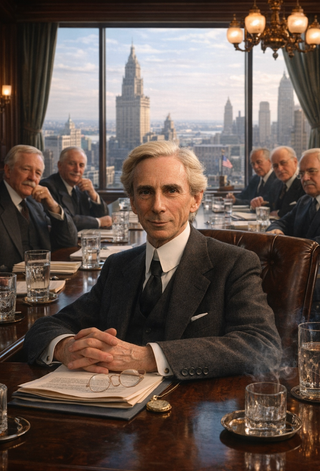
Author's Note: This article does not claim that Russell’s framework was intended for organizational application, but rather that it provides a conceptual structure through which such application can be rigorously developed. This approach complements, but is distinct from, existing traditions in organizational theory that emphasize decision-making,

Author’s Note: This article forms part of an ongoing reading of Immanuel Kant’s Groundwork of the Metaphysics of Morals, considered in relation to questions of institutional life, leadership, and governance. These reflections inform a broader body of work at the intersection of philosophical foundations and practical institutional responsibility.

Author’s Note: This article forms part of an ongoing reading of Immanuel Kant’s philosophical corpus, exploring its relevance for organizational leadership and institutional governance.
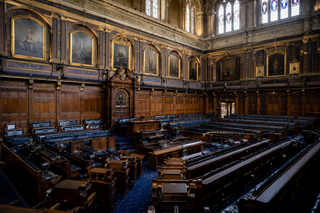
There is a particular kind of setting in which serious thought becomes possible—not in isolation alone, but in environments where distraction recedes just
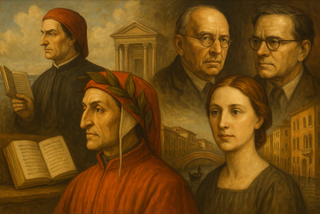
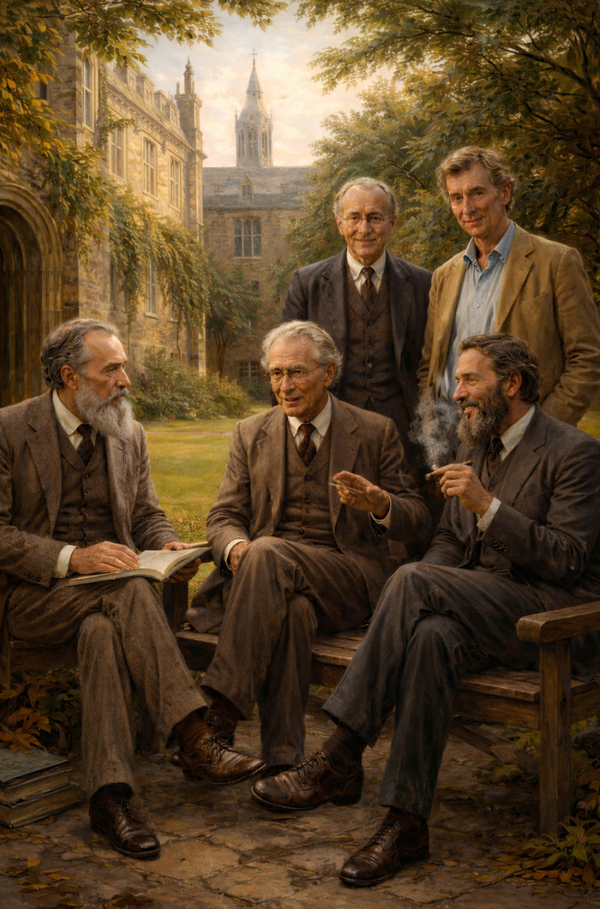
To live the life of the mind is to navigate the deep currents of thought and the restless tides of the world with the scholar’s precision and the poet’s eye. Here, the arc of a life bends toward the True, the Good, and the Beautiful, and the work

Reflective Commentary (2025)
Looking back at this essay more than a decade after I first wrote it in 2014, I see how my thinking about "wasted time" has changed. When I wrote this as a doctoral student, leisure, contemplation, and intellectual growth were seen as important. Now, the
Editorial Note: This article was originally written in 2016.
The Tower of Babel rises, not as ruin, but as ambition carved in stone. Pieter Bruegel the Elder captured more than mortar and men. He gave us a vision of collective striving, a skyward hunger to reach the divine through human
Intervention Strategies in Davidson County
Costs, Benefits, and Sectoral Influences
Obesogenic Food Environments
Regulatory changes and investments to improve access to nutritious foods carry initial costs. Long-term benefits include reduced healthcare spending and growth in health-conscious industries. These changes can foster innovation and stakeholder alignment.
Economic Planning &
Advancing Global Healthcare Leadership: One Year On
I often reflect on how the value of studying at Oxford is found in the combined experience of the rigorous academic programme, the joy of engaging with world-class professors and fellow cohort members, and the immersive experience of the city itself. Whether
Bradbury, the prophet of a future age, warns that the great peril is not merely the loss of books. Rather, tragically, the peril is the slow erosion of the mind’s capacity to think freely. The danger begins not with fire and censorship. Gradually, with habit and the quiet surrender
Reflective Commentary (2025)
At the time of composing this essay in 2014, Richard Wilbur stood in his ninety-fourth year. I had mistakenly thought that he had already passed, but he was very much alive, a fact Professor Robert Woods gently noted with the hopeful remark, “He is still alive
The Holy Bible, recognized within the Christian tradition as inspired by the Spirit, has long served as a principal authority in both church and academy. Its canon, recognized across centuries, became foundational for study and was frequently cited as sufficient for “all things that pertain to life and godliness” (2
Did the God of the Holy Bible endow Pope Leo with papal infallibility, or did God grant Christian liberty to Luther’s constituents to stand against what they perceived as doctrinal and moral issues of the Church? The inherent difficulty with the question is that the two perspectives are mutually
This review examines Richard Whatmore’s contribution to the field of intellectual history, a work of notable clarity and ambition.. The review was published in the Journal of Faith and the Academy 9, no. 2 (Fall 2016): 93-95.
Book Review
Whatmore, Richard. What is Intellectual History? Cambridge, UK: Polity