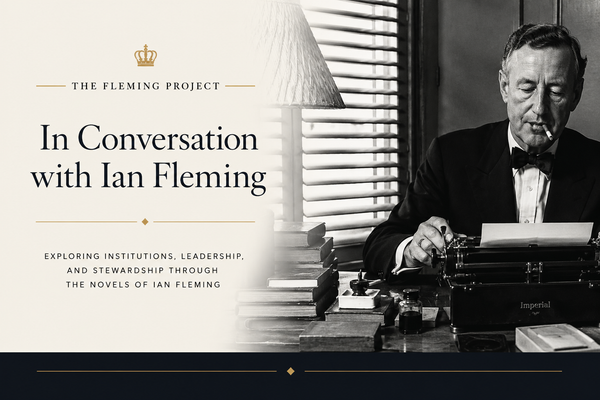

What ultimately distinguishes governance regimes—understood here as legally constituted systems for allocating authority, fiduciary obligation, and control over assets across time—is not theology or organizational culture, but the presence or absence of a mediating legal person that interposes fiduciary obligation between individuals and property. In doctrinal terms, that
by Shawn D. Mathis, PhD, MSc (Oxon), MA
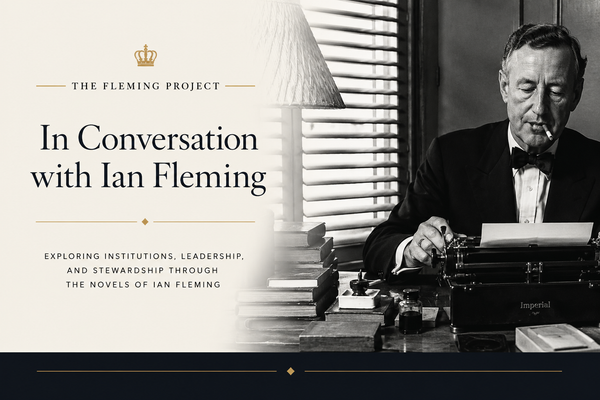
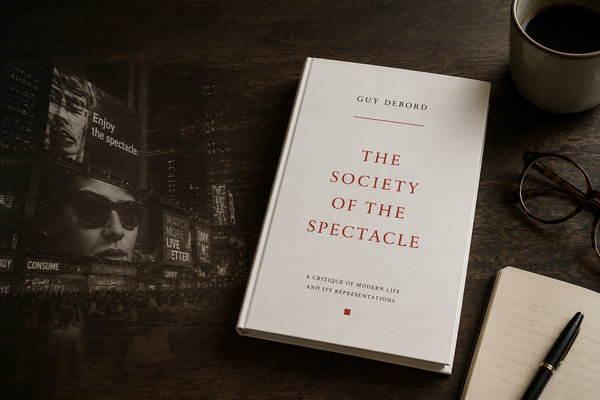
Some books begin as proposals. Others begin as conversations. Navigating the Organisational Landscape: A Scholar-Practitioner’s Guide to Effective Leadership began as a promise made on a summer afternoon outside the Sheldonian Theatre in Oxford, after a world had changed and a cohort had endured it together. The book first
by Shawn D. Mathis, PhD, MSc (Oxon), MA
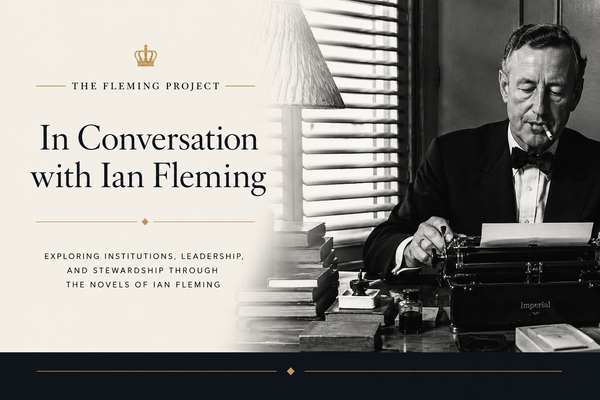
One of the most persistent failures in moral and religious institutions is not malice, corruption, or even incompetence. It is a category error. Institutions collapse because they confuse authority with governance and only discover the difference when something goes wrong and responsibility can no longer be deferred. Authority answers the
by Shawn D. Mathis, PhD, MSc (Oxon), MA

Submitted on August 25, 2015, to Professor Ben Lockerd as part of the doctoral course, LIT 7324 Literary Analysis: Great Ideas, Authors, and Writings. Studies in classical literature, such as Plato's Republic (Book X), Ion, and Phaedrus, Aristotle's Poetics, Horace's The Art of Poetry,
by Shawn D. Mathis, PhD, MSc (Oxon), MA
In the opening lines of his preface to The Metalogicon, translator Daniel D. McGarry invokes Horace’s enduring admonition to writers: If ever you write anything, keep it to yourself for nine years, for what has never been divulged can be destroyed, but once published it is beyond recall. McGarry,
by Shawn D. Mathis, PhD, MSc (Oxon), MA
There is a woman in the water meadows of Oxford. Draped in Oxford blue, she sits in quiet majesty, her lap sheltering a small, idealized city. Its dreaming spires rise like prayers from her womb. She is Isis, Queen and Mother, as imagined by Evelyn Dunbar in her painting Oxford.
by Shawn D. Mathis, PhD, MSc (Oxon), MA
These key lines raise the following considerations: 1. (1) the presence of a question of choice in the equation ("what...we can possibly do, you and I, to untie the difficult knot"),[12] 2. (2) the necessity of making a decision to alter the status quo ("to
by Shawn D. Mathis, PhD, MSc (Oxon), MA
Editorial Note: This article was originally written in 2016. The Tower of Babel rises, not as ruin, but as ambition carved in stone. Pieter Bruegel the Elder captured more than mortar and men. He gave us a vision of collective striving, a skyward hunger to reach the divine through human
by Shawn D. Mathis, PhD, MSc (Oxon), MA
What ultimately distinguishes governance regimes—understood here as legally constituted systems for allocating authority, fiduciary obligation, and control over assets across time—is not theology or organizational culture, but the presence or absence of a mediating legal person that interposes fiduciary obligation between individuals and property. In doctrinal terms, that
by Shawn D. Mathis, PhD, MSc (Oxon), MA
Institutions rarely fail where they appear weakest. More often, fracture emerges when authority has outgrown the form meant to carry it. This essay explores how institutional maturity requires structure capable of surviving succession and scrutiny.
In the heart of Florence once stood “the temple where the baptistery is now located.”[1] Positioned as a Florentine centerpiece, the temple served as a sacred relic to Mars, son of the king of the gods in Roman mythology, Jupiter.[2] Mars, the god of war, was the lover
Evidence-Based Practice (EBP) is founded on a simple yet demanding premise: decisions should be grounded in the best available research evidence, informed by professional expertise, and shaped by contextual factors such as organisational priorities or patient values. In healthcare and other leadership contexts, this balance is not achieved by chance
To live the life of the mind is to navigate the deep currents of thought and the restless tides of the world with the scholar’s precision and the poet’s eye. Here, the arc of a life bends toward the True, the Good, and the Beautiful, and the work

The keynote address for incoming doctoral students at Freed-Hardeman University, titled On Being Scholarly, was delivered by Dr. Shawn D. Mathis, PhD, on May 13, 2018, in Henderson, TN. You are a scholar; these are your fellows. Individually, you are scholars. A scholar is one given to serious academic inquiry.
Reflective Commentary (2025) The following essay was written in 2014 for one of my earliest doctoral courses at Faulkner University. Dr. Robert Woods led the course titled “Introduction to Human Letters." An Evaluative Inquiry into the Life of the Modern Liberal Individual Leisure and festivity together form the foundation
What ultimately distinguishes governance regimes—understood here as legally constituted systems for allocating authority, fiduciary obligation, and control over assets across time—is not theology or organizational culture, but the presence or absence of a mediating legal person that interposes fiduciary obligation between individuals and property. In doctrinal terms, that
by Shawn D. Mathis, PhD, MSc (Oxon), MA
Some books begin as proposals. Others begin as conversations. Navigating the Organisational Landscape: A Scholar-Practitioner’s Guide to Effective Leadership began as a promise made on a summer afternoon outside the Sheldonian Theatre in Oxford, after a world had changed and a cohort had endured it together. The book first
by Shawn D. Mathis, PhD, MSc (Oxon), MA
One of the most persistent failures in moral and religious institutions is not malice, corruption, or even incompetence. It is a category error. Institutions collapse because they confuse authority with governance and only discover the difference when something goes wrong and responsibility can no longer be deferred. Authority answers the
by Shawn D. Mathis, PhD, MSc (Oxon), MA
Submitted on August 25, 2015, to Professor Ben Lockerd as part of the doctoral course, LIT 7324 Literary Analysis: Great Ideas, Authors, and Writings. Studies in classical literature, such as Plato's Republic (Book X), Ion, and Phaedrus, Aristotle's Poetics, Horace's The Art of Poetry,
by Shawn D. Mathis, PhD, MSc (Oxon), MA
In the opening lines of his preface to The Metalogicon, translator Daniel D. McGarry invokes Horace’s enduring admonition to writers: If ever you write anything, keep it to yourself for nine years, for what has never been divulged can be destroyed, but once published it is beyond recall. McGarry,
by Shawn D. Mathis, PhD, MSc (Oxon), MA
There is a woman in the water meadows of Oxford. Draped in Oxford blue, she sits in quiet majesty, her lap sheltering a small, idealized city. Its dreaming spires rise like prayers from her womb. She is Isis, Queen and Mother, as imagined by Evelyn Dunbar in her painting Oxford.
by Shawn D. Mathis, PhD, MSc (Oxon), MA
These key lines raise the following considerations: 1. (1) the presence of a question of choice in the equation ("what...we can possibly do, you and I, to untie the difficult knot"),[12] 2. (2) the necessity of making a decision to alter the status quo ("to
by Shawn D. Mathis, PhD, MSc (Oxon), MA
Editorial Note: This article was originally written in 2016. The Tower of Babel rises, not as ruin, but as ambition carved in stone. Pieter Bruegel the Elder captured more than mortar and men. He gave us a vision of collective striving, a skyward hunger to reach the divine through human
by Shawn D. Mathis, PhD, MSc (Oxon), MA