![The Hermeneutics of Authority: Luther, Leo, and the Contest over Christian Liberty in the Reformation[1]](https://storage.ghost.io/c/3e/0d/3e0d1119-db6f-4e04-befd-22fbc687cefe/content/images/size/w600/2025/08/Screenshot-2025-08-18-at-10.23.54---AM.png)
Did the God of the Holy Bible endow Pope Leo with papal infallibility, or did God grant Christian liberty to Luther’s constituents to stand against what they perceived as doctrinal and moral issues of the Church? The inherent difficulty with the question is that the two perspectives are mutually
by Shawn D. Mathis, PhD, MSc (Oxon), MA

How does China think about power, political order, war, and its place in the world? Francesco Sisci’s new book, Thinking from the Tip of the Spear: Military Power, Political Order, and the Making of China’s Grand Strategy, approaches those questions through a sweeping historical and comparative lens. One
The United States enters its 250th year with a historical inheritance far younger than those of the world's older civilizations. Two and a half centuries may seem substantial in a nation's life, yet it is remarkably short compared with the histories of Rome, Greece, China, Britain,
Author's Note: This article does not claim that Russell’s framework was intended for organizational application, but rather that it provides a conceptual structure through which such application can be rigorously developed. This approach complements, but is distinct from, existing traditions in organizational theory that emphasize decision-making,
Author’s Note: This article forms part of an ongoing reading of Immanuel Kant’s Groundwork of the Metaphysics of Morals, considered in relation to questions of institutional life, leadership, and governance. These reflections inform a broader body of work at the intersection of philosophical foundations and practical institutional responsibility.

Author’s Note: This article forms part of an ongoing reading of Immanuel Kant’s philosophical corpus, exploring its relevance for organizational leadership and institutional governance. There is a particular kind of setting in which serious thought becomes possible—not in isolation alone, but in environments where distraction recedes just
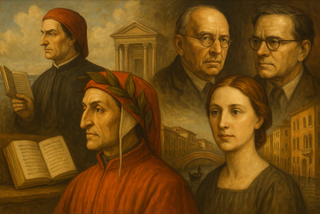
To live the life of the mind is to navigate the deep currents of thought and the restless tides of the world with the scholar’s precision and the poet’s eye. Here, the arc of a life bends toward the True, the Good, and the Beautiful, and the work

Reflective Commentary (2025) Looking back at this essay more than a decade after I first wrote it in 2014, I see how my thinking about "wasted time" has changed. When I wrote this as a doctoral student, leisure, contemplation, and intellectual growth were seen as important. Now, the