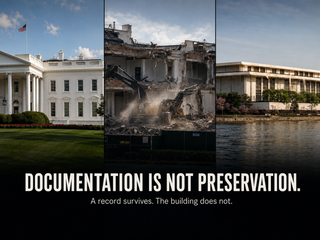



In times of political tension, most of the attention goes to what is happening on the surface—policy fights, elections, international disputes. But underneath all of that is a quieter, more important question:
Central Question
What kind of right and wrong is guiding these decisions?
One might think of ethics
Institutional governance—the structures, processes, and norms through which authority is exercised—has long been central to political and social order. In recent years, however, political polarization has emerged as a particularly acute challenge to its effective operation. Across many democratic systems, widening ideological divisions are placing strain on institutions,
Author's Note: As I revisited Campbell's writings, one feature became increasingly difficult to ignore. Beneath the debates over doctrine and church reform lies a sustained concern with authority, interpretation, and knowledge itself. Campbell was asking how ordinary people could read, understand, and act upon what they
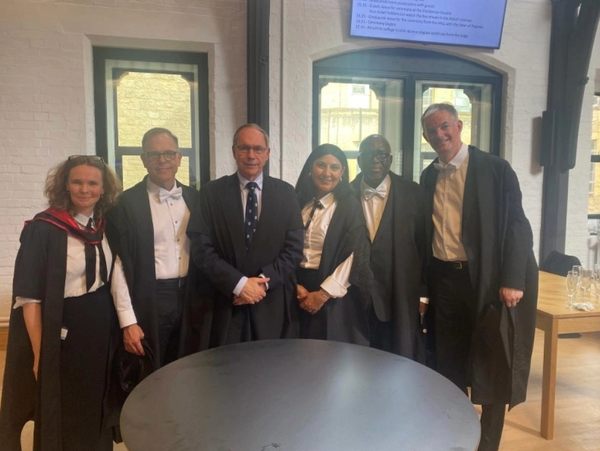
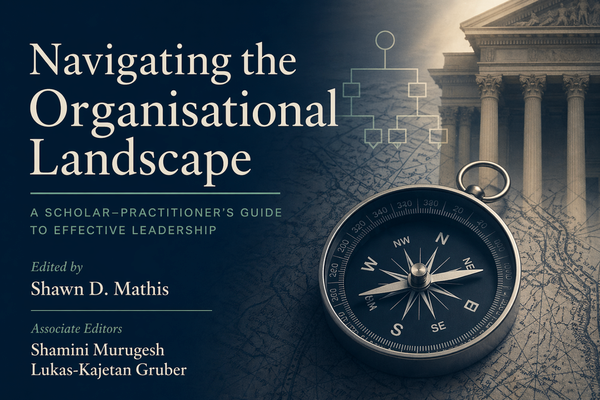
Some books begin as proposals. Others begin as conversations. Navigating the Organisational Landscape: A Scholar-Practitioner’s Guide to Effective Leadership began as a promise made on a summer afternoon outside the Sheldonian Theatre in Oxford, after a world had changed and a cohort had endured it together.
The book
Submitted on August 25, 2015, to Professor Ben Lockerd as part of the doctoral course, LIT 7324 Literary Analysis: Great Ideas, Authors, and Writings.
Studies in classical literature, such as Plato's Republic (Book X), Ion, and Phaedrus, Aristotle's Poetics, Horace's The Art of Poetry,
In the opening lines of his preface to The Metalogicon, translator Daniel D. McGarry invokes Horace’s enduring admonition to writers:
If ever you write anything, keep it to yourself for nine years, for what has never been divulged can be destroyed, but once published it is beyond recall.
McGarry,
There is a woman in the water meadows of Oxford. Draped in Oxford blue, she sits in quiet majesty, her lap sheltering a small, idealized city. Its dreaming spires rise like prayers from her womb. She is Isis, Queen and Mother, as imagined by Evelyn Dunbar in her painting Oxford.
These key lines raise the following considerations:
1.
(1) the presence of a question of choice in the equation ("what...we can possibly do, you and I, to untie the difficult knot"),[12]
2.
(2) the necessity of making a decision to alter the status quo ("to
In times of political tension, most of the attention goes to what is happening on the surface—policy fights, elections, international disputes. But underneath all of that is a quieter, more important question:
Central Question
What kind of right and wrong is guiding these decisions?
One might think of ethics
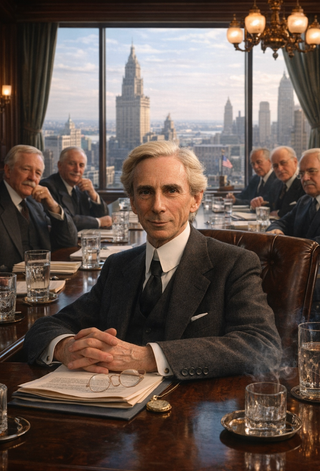
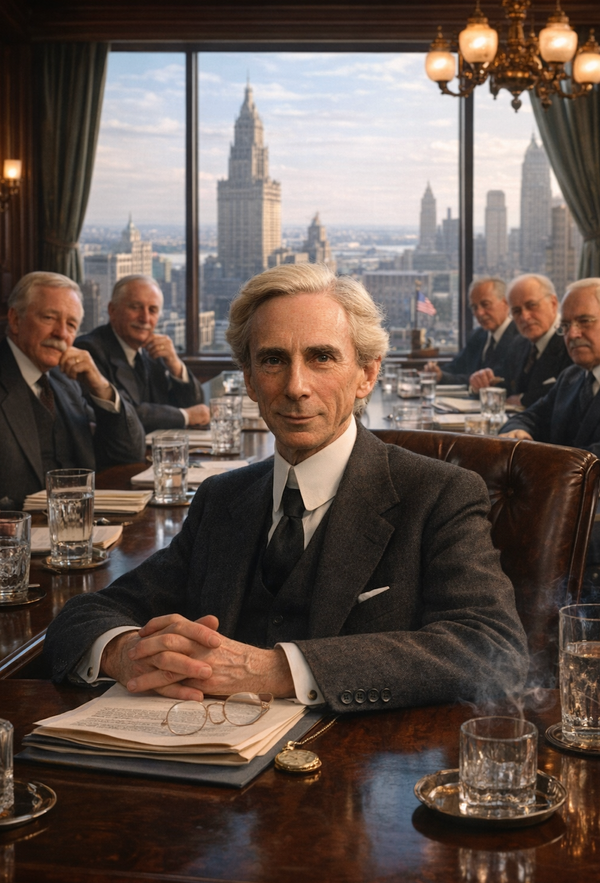
Author's Note: This article does not claim that Russell’s framework was intended for organizational application, but rather that it provides a conceptual structure through which such application can be rigorously developed. This approach complements, but is distinct from, existing traditions in organizational theory that emphasize decision-making,

Author’s Note: This article forms part of an ongoing reading of Immanuel Kant’s Groundwork of the Metaphysics of Morals, considered in relation to questions of institutional life, leadership, and governance. These reflections inform a broader body of work at the intersection of philosophical foundations and practical institutional responsibility.

Author’s Note: This article forms part of an ongoing reading of Immanuel Kant’s philosophical corpus, exploring its relevance for organizational leadership and institutional governance.
There is a particular kind of setting in which serious thought becomes possible—not in isolation alone, but in environments where distraction recedes just
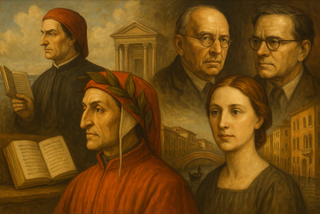
To live the life of the mind is to navigate the deep currents of thought and the restless tides of the world with the scholar’s precision and the poet’s eye. Here, the arc of a life bends toward the True, the Good, and the Beautiful, and the work

Reflective Commentary (2025)
Looking back at this essay more than a decade after I first wrote it in 2014, I see how my thinking about "wasted time" has changed. When I wrote this as a doctoral student, leisure, contemplation, and intellectual growth were seen as important. Now, the
In times of political tension, most of the attention goes to what is happening on the surface—policy fights, elections, international disputes. But underneath all of that is a quieter, more important question:
Central Question
What kind of right and wrong is guiding these decisions?
One might think of ethics
Institutional governance—the structures, processes, and norms through which authority is exercised—has long been central to political and social order. In recent years, however, political polarization has emerged as a particularly acute challenge to its effective operation. Across many democratic systems, widening ideological divisions are placing strain on institutions,
Author's Note: As I revisited Campbell's writings, one feature became increasingly difficult to ignore. Beneath the debates over doctrine and church reform lies a sustained concern with authority, interpretation, and knowledge itself. Campbell was asking how ordinary people could read, understand, and act upon what they
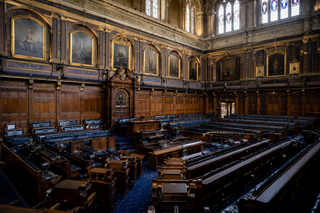
Some books begin as proposals. Others begin as conversations. Navigating the Organisational Landscape: A Scholar-Practitioner’s Guide to Effective Leadership began as a promise made on a summer afternoon outside the Sheldonian Theatre in Oxford, after a world had changed and a cohort had endured it together.
The book
Submitted on August 25, 2015, to Professor Ben Lockerd as part of the doctoral course, LIT 7324 Literary Analysis: Great Ideas, Authors, and Writings.
Studies in classical literature, such as Plato's Republic (Book X), Ion, and Phaedrus, Aristotle's Poetics, Horace's The Art of Poetry,
In the opening lines of his preface to The Metalogicon, translator Daniel D. McGarry invokes Horace’s enduring admonition to writers:
If ever you write anything, keep it to yourself for nine years, for what has never been divulged can be destroyed, but once published it is beyond recall.
McGarry,
There is a woman in the water meadows of Oxford. Draped in Oxford blue, she sits in quiet majesty, her lap sheltering a small, idealized city. Its dreaming spires rise like prayers from her womb. She is Isis, Queen and Mother, as imagined by Evelyn Dunbar in her painting Oxford.
These key lines raise the following considerations:
1.
(1) the presence of a question of choice in the equation ("what...we can possibly do, you and I, to untie the difficult knot"),[12]
2.
(2) the necessity of making a decision to alter the status quo ("to