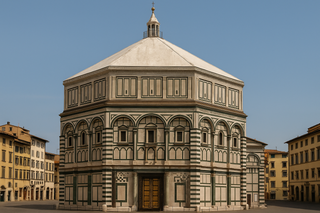
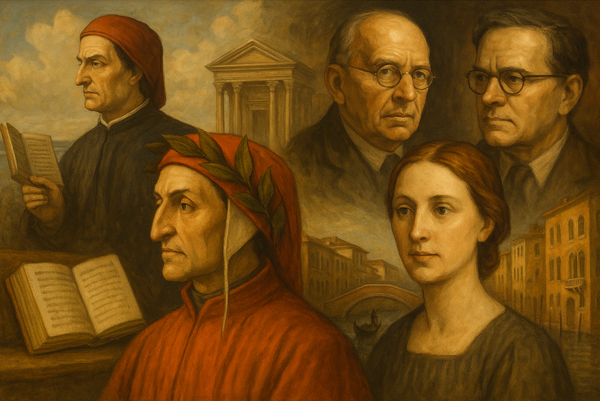
In the heart of Florence once stood “the temple where the baptistery is now located.”[1] Positioned as a Florentine centerpiece, the temple served as a sacred relic to Mars, son of the king of the gods in Roman mythology, Jupiter.[2] Mars, the god of war, was the lover
To live the life of the mind is to navigate the deep currents of thought and the restless tides of the world with the scholar’s precision and the poet’s eye. Here, the arc of a life bends toward the True, the Good, and the Beautiful, and the work
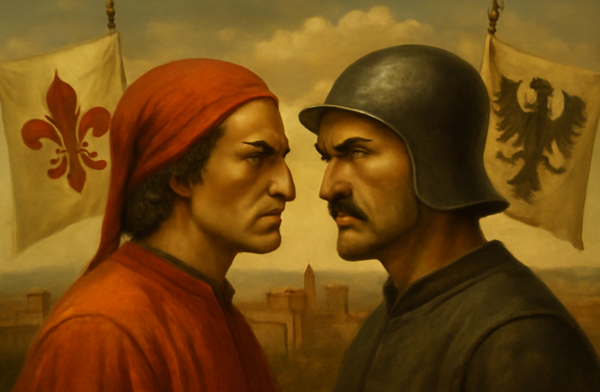
"A Story of the Guelfs and Ghibellines Through the Eyes of Leonardo Bruni" is an essay by Shawn D. Mathis, submitted as partial fulfillment of the requirements for HU 7311 "Introduction to Humane Letters" at Faulkner University. The essay, written under the guidance of Dr. Robert
"A Story of the Guelfs and Ghibellines Through the Eyes of Leonardo Bruni" is an essay by Shawn D. Mathis, submitted as partial fulfillment of the requirements for HU 7311 "Introduction to Humane Letters" at Faulkner University. The essay, written under the guidance of Dr. Robert
In the heart of Florence once stood “the temple where the baptistery is now located.”[1] Positioned as a Florentine centerpiece, the temple served as a sacred relic to Mars, son of the king of the gods in Roman mythology, Jupiter.[2] Mars, the god of war, was the lover
To live the life of the mind is to navigate the deep currents of thought and the restless tides of the world with the scholar’s precision and the poet’s eye. Here, the arc of a life bends toward the True, the Good, and the Beautiful, and the work
The keynote address for incoming doctoral students at Freed-Hardeman University, titled On Being Scholarly, was delivered by Dr. Shawn D. Mathis, PhD, on May 13, 2018, in Henderson, TN.
You are a scholar; these are your fellows.
Individually, you are scholars. A scholar is one given to serious academic
The reign of Pope Boniface VIII is a tapestry of papal agendas fashioned for the creation of empire under the guise of the Holy Roman Church. His papacy materializes as kingship rather than pure Apostolic See. The papacy is a relic of the spiritual body. Empire is the incarnation of
Reflective Commentary (2025)
This essay undertakes a critical examination of infallible, divine revelation in Christianity, focusing on the dynamic interplay between Scripture, Tradition, and ex cathedra authority as understood within both Catholic and Protestant traditions. One of its main strengths lies in its expansive historical grounding, tracing the development of
Reflective Commentary (2025)
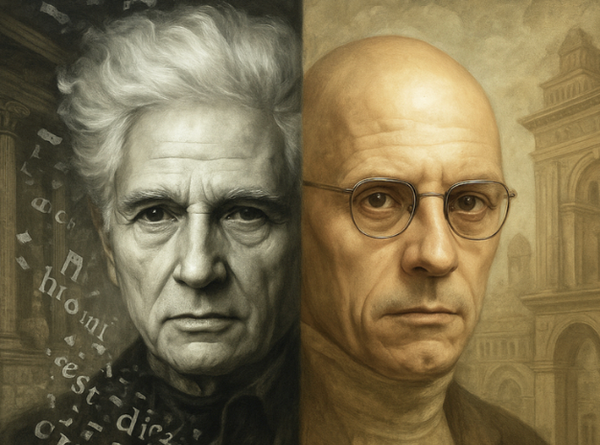
This brief essay, composed in 2015, records my first serious engagement with the post-structuralist theories of Michel Foucault and Jacques Derrida. At that time, my priority was to précis their arguments and to register my own tentative responses as a doctoral student. On re-reading, I
Reflective Commentary (2025)
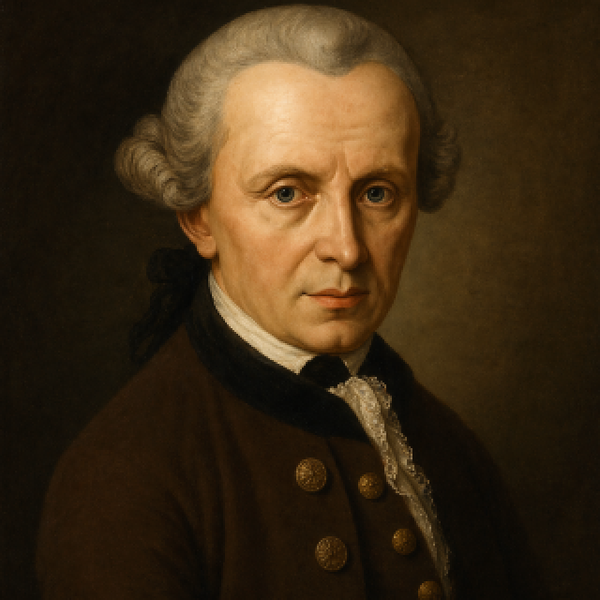
This essay marks a foundational moment in my scholarly engagement with Immanuel Kant’s philosophy of art and aesthetics. The primary aim was to unravel Kant’s conceptual framework concerning fine art. Attention centred on his elevation of poetry and the notion of the imaginative genius. The