In the opening lines of his preface to The Metalogicon, translator Daniel D. McGarry invokes Horace’s enduring admonition to writers:
If ever you write anything, keep it to yourself for nine years, for what has never been divulged can be destroyed, but once published it is beyond recall.
McGarry,
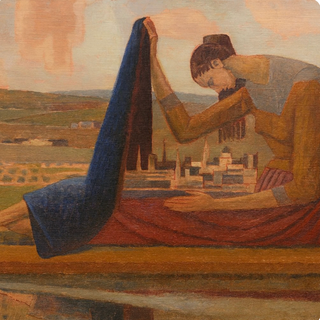
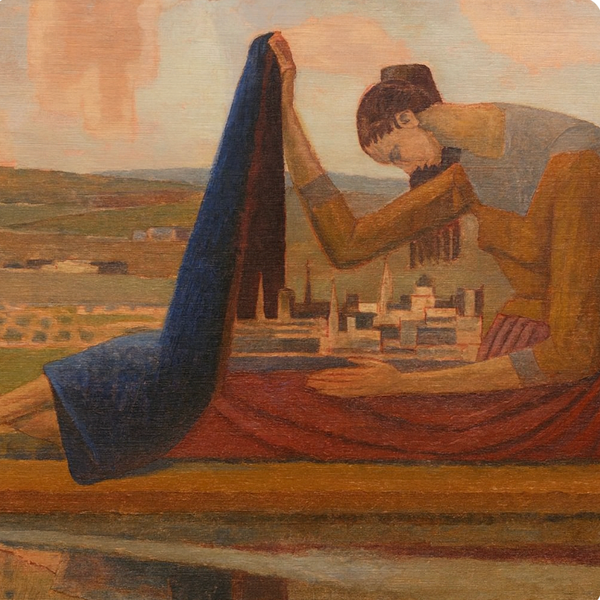
There is a woman in the water meadows of Oxford. Draped in Oxford blue, she sits in quiet majesty, her lap sheltering a small, idealized city. Its dreaming spires rise like prayers from her womb. She is Isis, Queen and Mother, as imagined by Evelyn Dunbar in her painting Oxford.
Submitted on August 25, 2015, to Professor Ben Lockerd as part of the doctoral course, LIT 7324 Literary Analysis: Great Ideas, Authors, and Writings.
Studies in classical literature, such as Plato's Republic (Book X), Ion, and Phaedrus, Aristotle's Poetics, Horace's The Art of Poetry,
Submitted on August 25, 2015, to Professor Ben Lockerd as part of the doctoral course, LIT 7324 Literary Analysis: Great Ideas, Authors, and Writings.
Studies in classical literature, such as Plato's Republic (Book X), Ion, and Phaedrus, Aristotle's Poetics, Horace's The Art of Poetry,
In the opening lines of his preface to The Metalogicon, translator Daniel D. McGarry invokes Horace’s enduring admonition to writers:
If ever you write anything, keep it to yourself for nine years, for what has never been divulged can be destroyed, but once published it is beyond recall.
McGarry,
There is a woman in the water meadows of Oxford. Draped in Oxford blue, she sits in quiet majesty, her lap sheltering a small, idealized city. Its dreaming spires rise like prayers from her womb. She is Isis, Queen and Mother, as imagined by Evelyn Dunbar in her painting Oxford.
These key lines raise the following considerations:
1.
(1) the presence of a question of choice in the equation ("what...we can possibly do, you and I, to untie the difficult knot"),[12]
2.
(2) the necessity of making a decision to alter the status quo ("to
Editorial Note: This article was originally written in 2016.
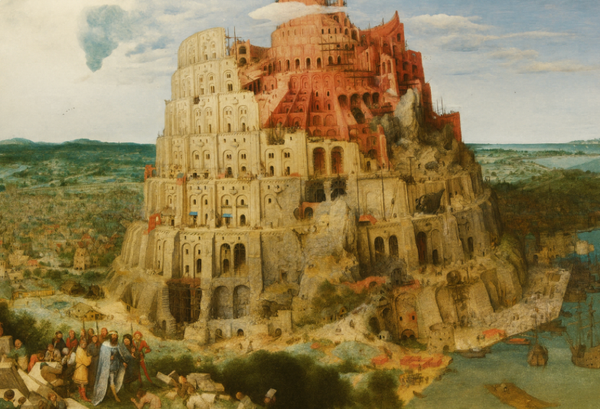
The Tower of Babel rises, not as ruin, but as ambition carved in stone. Pieter Bruegel the Elder captured more than mortar and men. He gave us a vision of collective striving, a skyward hunger to reach the divine through human
Bradbury, the prophet of a future age, warns that the great peril is not merely the loss of books. Rather, tragically, the peril is the slow erosion of the mind’s capacity to think freely. The danger begins not with fire and censorship. Gradually, with habit and the quiet surrender
Reflective Commentary (2025)
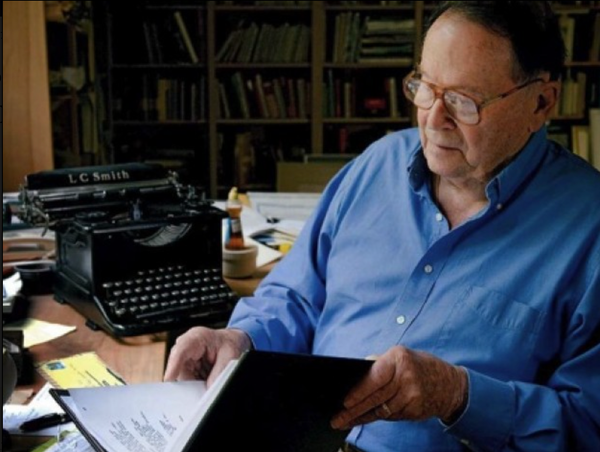
At the time of composing this essay in 2014, Richard Wilbur stood in his ninety-fourth year. I had mistakenly thought that he had already passed, but he was very much alive, a fact Professor Robert Woods gently noted with the hopeful remark, “He is still alive
The Holy Bible, recognized within the Christian tradition as inspired by the Spirit, has long served as a principal authority in both church and academy. Its canon, recognized across centuries, became foundational for study and was frequently cited as sufficient for “all things that pertain to life and godliness” (2